


Why Live Edge Tables Can Be a Great Choice for Family Dining
A live edge table can work very well for family dining when the edge is properly shaped, sanded, sealed, and checked by hand. “Live edge” does not have to mean sharp or rough. It means the tabletop keeps some of the tree’s natural outline. The finished edge should still feel smooth and comfortable where people sit, lean, and walk past. You get a table with natural character without giving up everyday usability.

A Live Edge Adds Character Without Making the Room Feel Formal
Family dining rooms are used for more than dinner. Children do homework there. Adults answer emails, wrap gifts, or sit down for coffee. Friends gather around the table on weekends. A live edge suits this kind of room because it feels special without looking too perfect to use.
The natural outline gives the table movement. One section may curve inward, while another gently widens. That variation makes the tabletop feel warmer and less rigid than a perfectly straight rectangle. It can soften a room filled with square cabinets, straight walls, and simple chairs.
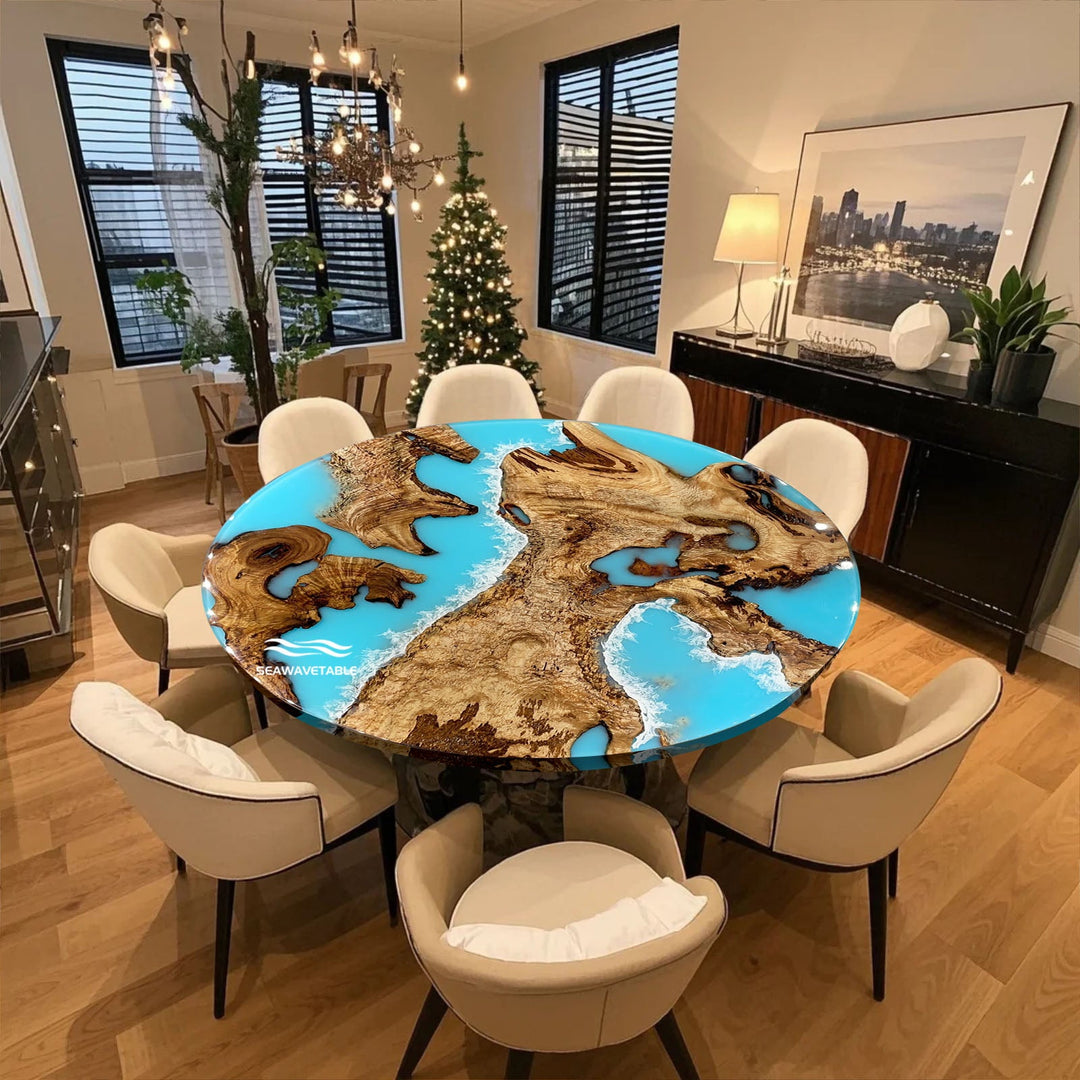
The Custom Live Edge Epoxy Wood Dining Table CRT-063 shows how a natural edge, warm wood grain, and blue resin can form a strong centerpiece while still providing a large, practical dining surface.
The important point is balance. The edge should look organic, but the table still needs enough usable width for plates, serving dishes, and everyday activities. A beautiful curve should not leave one seat with very little space.
Live Edge Does Not Have to Mean Sharp
A raw slab can contain bark, splinters, hard points, loose fibers, or deep pockets. That is not the condition you want at a family dining table. A finished live edge should be very different from a raw edge.
The edge should be cleaned and shaped so there are no loose pieces. High points should be softened. Areas that people may touch should be sanded smooth and protected with the selected finish. The goal is to preserve the natural line, not every rough part of the original slab.

When reviewing a table, do not judge comfort from a front-facing photo alone. Ask for close views of the long edges and corners. If possible, ask how the most pronounced points will be softened. Before production, confirm that the finished edge should feel smooth when a hand moves along it.
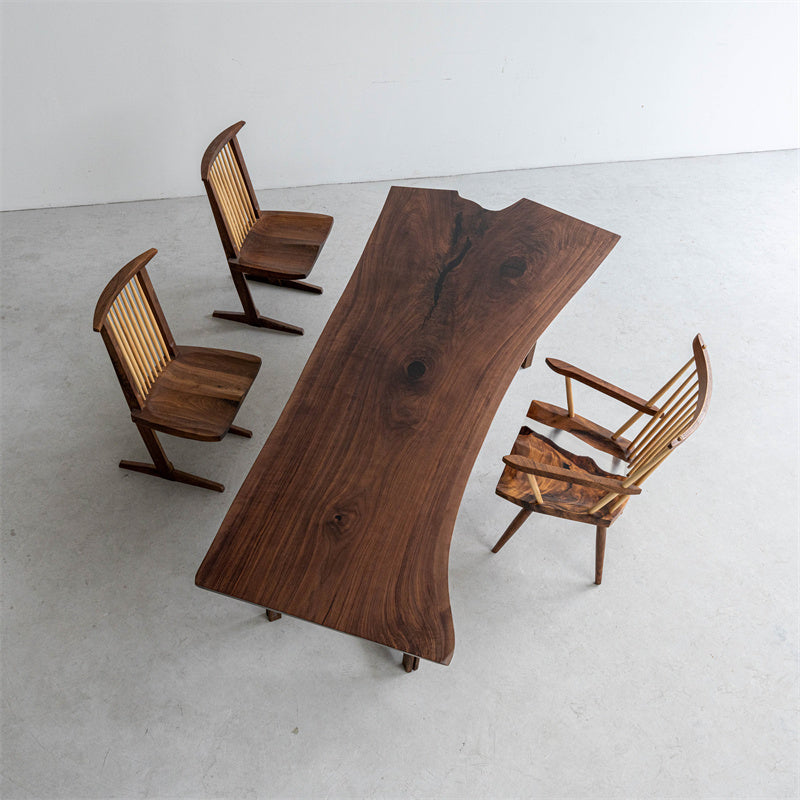
This is especially important in a busy walkway. No dining table can remove every bump risk, and “rounded” does not mean injury-proof. Still, a gently eased natural edge is a more practical choice than keeping a thin projection or a hard, pointed corner. The Custom Live Edge Epoxy Dining Table CRT-174 is a useful visual reference for discussing how much natural variation you want to keep.
Wood Grain and Natural Edges Make Everyday Marks Feel Less Dominant
Family tables develop small signs of use. Reflections change. Fingerprints appear. Fine scratches can become visible under strong light. A tabletop with active grain, natural color changes, and an irregular edge gives the eye more to notice than a perfectly uniform surface.
That does not prevent scratches or remove the need for care. It simply means the material already contains visual variation. A tiny mark may attract less attention than it would on a plain, solid-color surface.
Olive wood is a good example. Its grain can move in many directions, and its natural outline may include curves, holes, and narrow sections. The Custom Live Edge Olive Wood River Epoxy Dining Table CRT-116 shows how resin can complete irregular spaces while allowing the wood to remain visually dominant.

For daily use, the whole tabletop must remain flat and continuous. Wood and resin should finish at the same height. Natural-looking does not mean raised wood islands, deep grooves, or resin sitting above the timber. Plates, cups, hands, and cleaning cloths should move across the surface without catching.
Resin Can Keep the Natural Edge While Completing a Useful Shape
A live edge does not always need to form the outside edge. Sometimes the most interesting natural lines face inward and meet the resin. This preserves the curves while the outside of the tabletop stays straighter and easier to place in the room.
Resin can also fill an inward curve or natural opening so the family still has a useful surface. Clear resin keeps more attention on the wood. Dark resin creates a strong outline. Blue or green resin makes the table more expressive. Whatever color you choose, the resin flow should follow the wood rather than hide it.

The practical question is simple: does the design leave enough calm, usable space for the way your family eats? A wide decorative resin area can be beautiful, but it should not distract you from table width, seating, lighting, and care. Browse the Custom Live Edge Epoxy Table collection to compare quiet edge fills, central rivers, and more expressive layouts.
Choose the Edge for Your Actual Room and Routine
Live edge is a good family choice when the room has enough space around the table and the final contour is reviewed carefully. A narrow room may benefit from a more restrained natural curve. A large open dining room can usually handle a bolder outline.

Keep the Natural Look Practical for Everyday Use
A family table should be comfortable on an ordinary Tuesday, not only impressive in a photograph. When you review a slab, look closely at the parts people will touch most often. The long sides should feel smooth against a hand or forearm. The end corners should not finish in thin, hard points. Natural pockets should be cleaned, filled, or softened according to the final design so crumbs and cleaning cloths do not catch easily.
The outside edge and the resin boundary are two different things. A table can keep a strong live-edge line inside the resin while using a calmer outside outline. This is useful when you love the natural shape but need a predictable edge beside chairs or a walkway. It also allows the wood and resin to form one flat, continuous top.

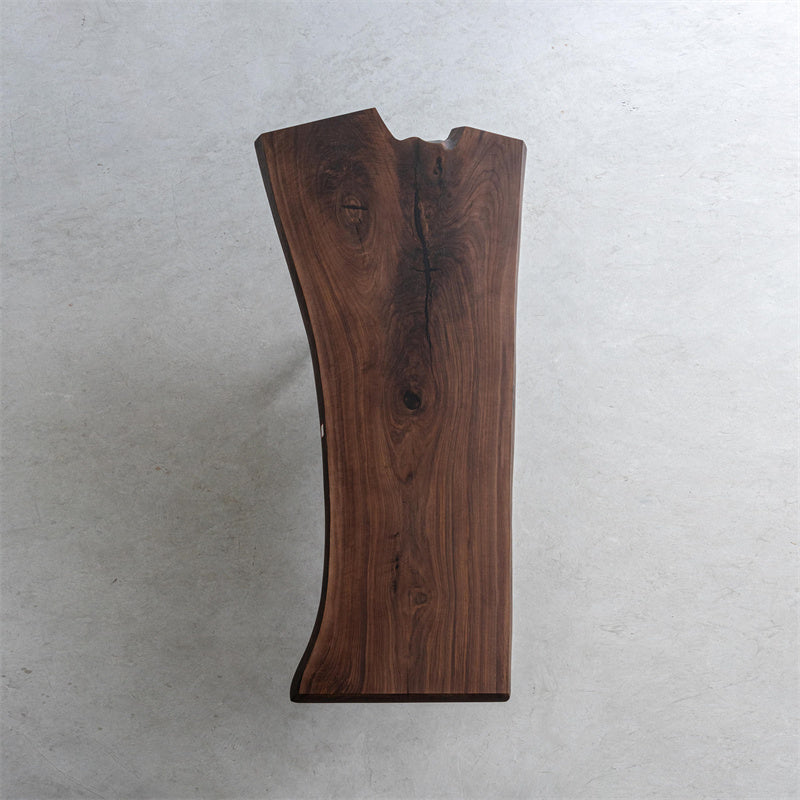
Ask to see the proposed slab direction and finished outline before production. A top view is especially useful because it shows the narrowest points, the strongest curves, and how the resin connects the wood. If one area looks too pointed or too deep, it can be discussed before the table is made.
For daily care, use a soft cloth and avoid dragging rough objects across the surface. Clean spills promptly. Coasters and trivets help protect the finish from moisture and heat. Wood responds to humidity changes, and strong sunlight can affect both wood finishes and epoxy over time, so a reasonably stable indoor location is the best choice. The daily maintenance guide for wood and epoxy slab tables provides more care details.
The best family live-edge table is not necessarily the wildest slab. It is the one that keeps enough natural character to feel special while remaining smooth, flat, and easy to live with. A short customization request can say: “Please keep the natural edge, but soften pointed areas. Make every touch point smooth, and keep the wood and resin completely flush.”
Frequently Asked Questions
Does a live edge dining table feel rough?
It should not feel rough after proper finishing. The natural outline can remain, but loose bark, splinters, sharp projections, and uncomfortable touch points should be removed or softened.
Can a live edge still have rounded corners?
Yes. A natural side profile can be combined with softened end corners. Ask to see the final outline so you know where the strongest curves and corner transitions will be.
Does resin make an irregular edge easier to use?
It can. Resin may complete deep curves or natural openings while keeping the wood line visible. The finished wood and resin should be level, smooth, and exactly flush.
Is live edge suitable for a busy dining room?
It can be when the contour fits the room and the edge is properly finished. Pay particular attention to corners and the sections beside common walking routes.
What should I confirm before production?
Confirm the actual slab or slab layout, finished outline, edge treatment, resin placement, dimensions, surface finish, and base. State clearly that all touch points must be smooth and the entire tabletop must be flat.
From the blog
View all