



Colored vs. Black, White & Clear Epoxy: Which Resin Table Will You Love for Years?
The best resin color is the one that still works when your room changes. Black is bold but easy to pair. White feels light and modern but shows dirt and color changes more clearly. Clear keeps the wood in charge, though scratches and glare can be easier to notice. A strong color brings personality, but it asks for more commitment. If you are unsure, start with the wood, choose a quiet resin treatment, and keep the color area smaller. That is usually the safest path to a table you will enjoy for years.

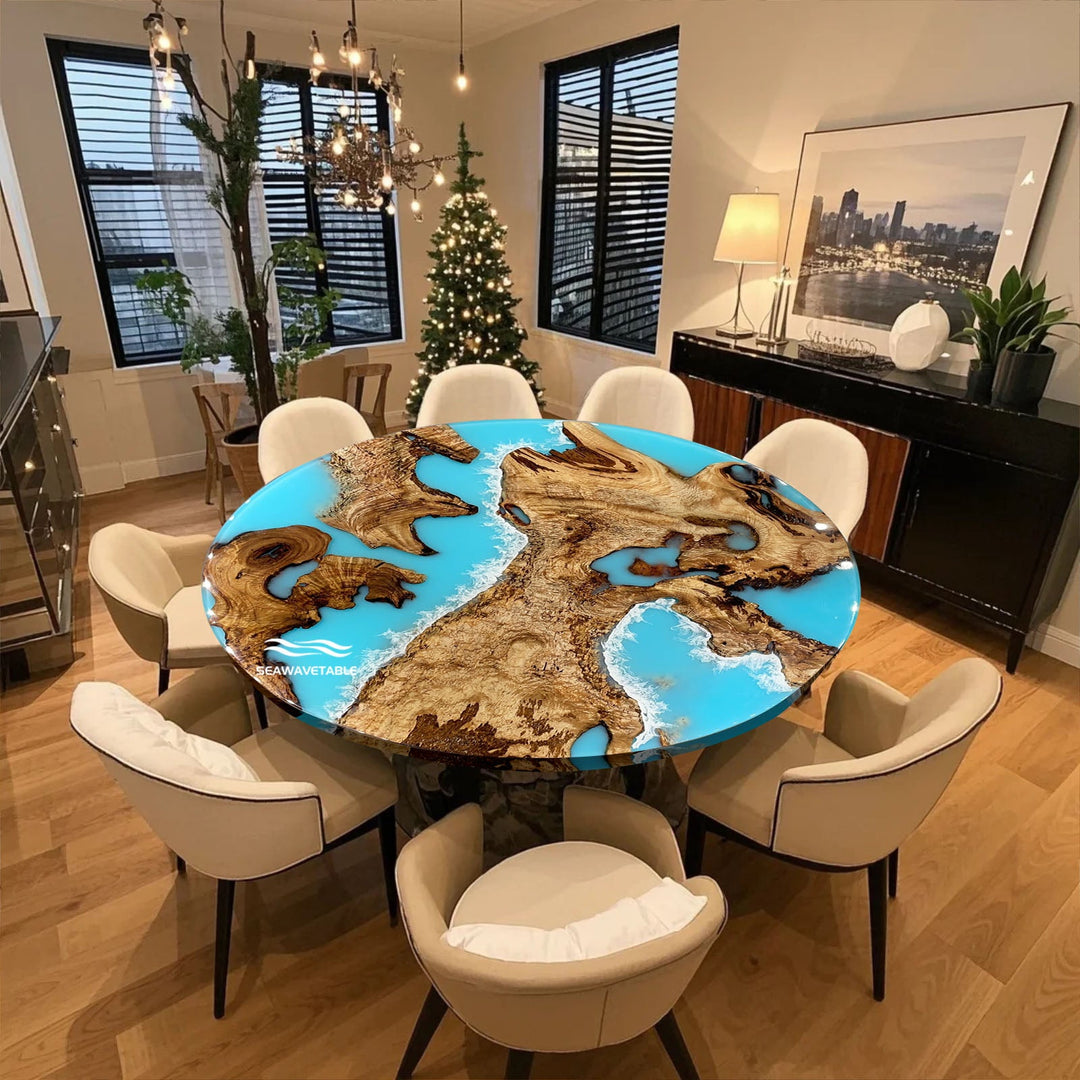
Official SeaWaveTable CRT-301 product photograph.
Start With the Room and the Wood, Not a Color Chip
A resin sample can look different across a large dining table. The amount of resin matters. A narrow fill in natural cracks is quiet. A wide center section becomes one of the strongest colors in the room.
Before choosing a shade, look at four things:
- the undertone of the wood;
- the size of the resin area;
- the amount and direction of daylight;
- the colors you already repeat in the room.
Warm walnut often pairs easily with black, smoky clear resin, deep blue, and softer warm whites. Olive wood has lively grain, so a complicated resin effect can compete with it. A calmer color may let the wood do more of the work. Light woods create less contrast with pearl white or clear resin, while black makes the outline more graphic.
Ask to see the proposed color beside the actual slab. View it in warm evening light and cool daylight if possible. SeaWaveTable's epoxy color options show directions such as Midnight Black, Pearl White, Clear, and several blues. Final approval should still cover transparency, pattern, resin coverage, and finish.
Compare the Four Choices Side by Side
Black: Creates clean contrast and connects easily with dark metal or black accents. A wide black area can feel heavy in a very small or dark room. It works especially well in modern, industrial, and warm-minimal interiors.
White: Brightens the composition and gives dark wood a crisp, graphic look. Dirt, dark crumbs, edge staining, and gradual color shifts may be easier to notice. It suits light contemporary rooms with controlled palettes.
Clear: Keeps attention on the wood edge and preserves visual depth. Fine scratches, bubbles, dust, and reflections can be more visible. It is a good fit when you want the natural slab to remain the main feature.
Colored: Adds personality and can connect the table to art, textiles, or a view. Strong colors may limit future room changes when used over a large area. They work best in rooms with a clear, repeated palette.
This is not a durability ranking. Formula, cure, finish, use, light, and care all affect aging. Color mainly changes what your eye notices and how easily the table fits future decor.

Official SeaWaveTable epoxy color chart. Final color and transparency should still be approved with the selected wood slab.
Choose Black for Contrast That Is Easy to Repeat
Black is often the simplest bold choice. It works with black chair frames, dark cabinet hardware, lighting, and window trim. You do not need to match every black perfectly. Repeating it in two or three places is usually enough to make the table feel connected to the room.
Opaque black also hides the view through the resin. That can make a complicated live edge look calmer. A matte or lower-sheen surface reduces mirror-like reflections, while gloss makes black look deeper. Both still need care. Gloss can show fingerprints and fine marks; matte surfaces need cleaning methods that do not create uneven shiny spots.
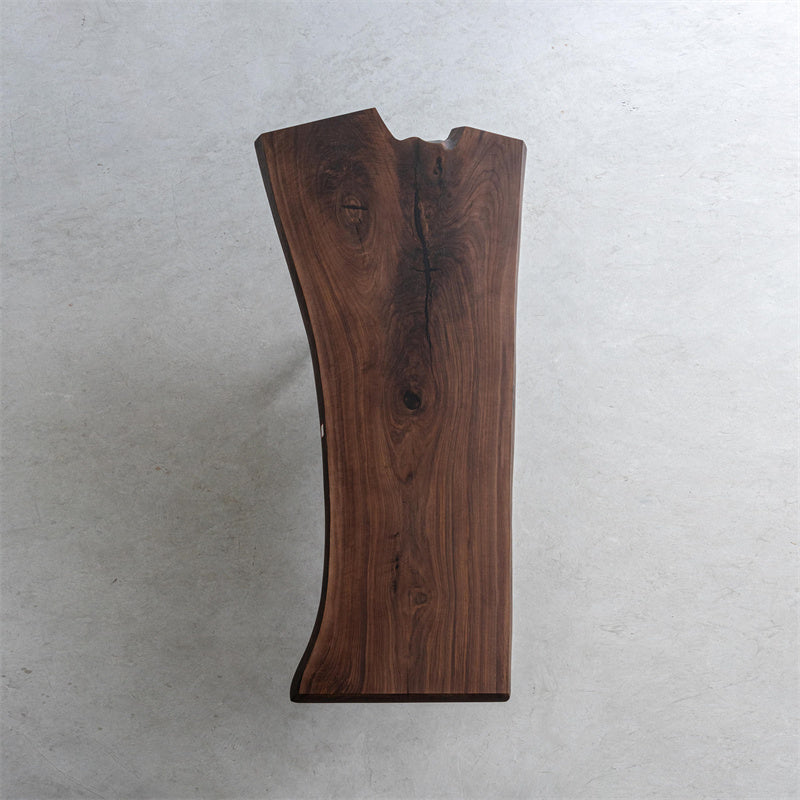
The CRT-300 Obsidian Drift Walnut Black Resin Table is a useful real example of walnut, black resin, a matte treatment, and a controlled beveled outline. For a more organic live-edge direction, the broader custom black epoxy table collection shows how much the wood shape and resin coverage can change the mood.
Choose black if you want clear contrast without adding a new color family. Be careful with a very wide black section in a dim room. In that case, use more visible wood, a narrower resin area, or a softer translucent black.

Official SeaWaveTable CRT-300 product photograph.
Choose White for a Lighter, More Graphic Look
White resin can make dark wood feel brighter and more modern. It works especially well when the room already has warm white walls, pale stone, light upholstery, or white cabinetry. The important detail is the undertone. A cold blue-white next to warm walnut may look disconnected. A softer pearl or cream white is often easier to live with.
White is not automatically low maintenance. Dark dust, food marks, and grime at the wood-resin line may be easier to see. Epoxy appearance can also change with light and age, so do not buy any white resin table on the promise that it will stay visually identical forever. Ask how the sample, finish, and placement are expected to behave, and avoid intense direct sunlight where practical.
The CRT-130 Black Walnut and White Epoxy Dining Table Top shows the crisp contrast between dark walnut and a white resin channel. Notice how the amount of white matters as much as the shade. If you want a quieter result, request a narrower area or use white mainly in natural openings instead of across a large center section.

Official SeaWaveTable CRT-130 product photograph.
Choose Clear When the Wood Should Stay in Charge
Clear epoxy is a good choice when the slab has grain, voids, and edges you want to keep visible. It can hold the composition together without introducing another strong color. It also works well in rooms where furniture, rugs, or art may change over time.
Clear does not mean invisible. The resin catches light, reflects windows, and creates visual depth. Fine scratches, trapped dust, small bubbles, and surface haze can be easier to notice because there is no pigment to hide them. A clear section can also reveal the base and floor below, so those elements become part of the view.
The CRT-069 Cunninghamia Wood Table with Transparent Epoxy clearly demonstrates how transparent resin can frame irregular natural wood and preserve the view through the tabletop. If you like this direction, approve the slab layout, clarity level, resin width, and the view through the table. Clear resin is most successful when those details feel intentional rather than empty.

Official SeaWaveTable CRT-069 product photograph.
Choose a Color When You Can Name What It Connects To
Blue, teal, green, red, gold, and layered ocean effects can give a table real personality. The safest way to use a strong color is to connect it to something that is likely to stay: a view, a favorite painting, permanent tile, cabinet color, or a repeated material palette. Do not choose it only because the isolated sample looks exciting.
There are three easy ways to make color more flexible:
- Use a deeper, less saturated shade instead of a bright one.
- Keep the colored resin area smaller so wood remains dominant.
- Repeat the color lightly in removable items such as cushions, glassware, or art.
Transparency also changes the result. Opaque color reads as a solid graphic shape. Translucent color shows depth and the natural edge below. Swirls and wave effects add movement, so they need more visual space than a flat tint.
The CRT-301 Olive Wood Blue Epoxy River Dining Table is a strong colored example: vivid resin, active olive grain, and a wave effect all share attention. If your room is already busy, simplify at least one of those elements. If your room is quiet, that stronger table can become the main feature.

Official SeaWaveTable CRT-301 product photograph.
Make the Long-Term Choice With a Simple Test
Save photos of your room in daylight and at night. Place large color blocks over the proposed resin areas using a basic phone or design app. Do not judge from a tiny square. Look at the approximate amount of color the finished table will contain.
Then ask yourself:
- If the rug and chairs changed, would this table still work?
- Do I want the resin or the wood to be the first thing people notice?
- Will the room benefit from stronger contrast or more calm?
- Am I comfortable with the marks and reflections this color and finish may reveal?
- Can I describe the exact color, transparency, pattern, and sheen I am approving?
For the most flexible answer, choose clear, smoky neutral, or black with generous visible wood. Choose white when you want a light graphic contrast and are comfortable giving it regular attention. Choose a strong color when it has a clear reason to live in the room.
Whatever you select, treat color, transparency, resin placement, wood slab, edge profile, and finish as one decision. Use coasters and trivets, wipe spills with a soft cloth, and avoid abrasive cleaners. SeaWaveTable's daily maintenance guide gives practical care guidance for gloss, matte, and mixed finishes.
Sources and Technical References
- Wood Handbook: Wood as an Engineering Material, USDA Forest Products Laboratory. Used for the relationship between wood and changing moisture conditions.
- Basic Care: Furniture and Objects Made of Wood, Canadian Conservation Institute. Used for light, humidity, handling, and cleaning context.
- Final Epoxy Surface, WEST SYSTEM. Used for qualified guidance on epoxy finishing and ultraviolet-light protection.
- Curatorial Care of Wooden Objects, U.S. National Park Service. Used for conservative furniture-care context.
- SeaWaveTable Epoxy Color Options, used for current brand color names and selection context.
Frequently Asked Questions
Which epoxy color is the most timeless?
There is no universal answer, but clear, smoky neutral, and black are usually easier to combine with changing decor. A strong color can also last if it connects to permanent elements you genuinely love.
Does clear epoxy stay perfectly clear forever?
Do not assume any clear epoxy surface will look unchanged forever. Light exposure, the finish system, cleaning, scratches, and age can affect its appearance. Ask about the specific materials and care instructions for your table.
Is black epoxy easier to maintain than white epoxy?
Black may hide some stains and the view through the resin, but it can show dust, fingerprints, and fine marks depending on the sheen. White may show dark debris and grime more clearly. Finish and care matter as much as color.
Can I match epoxy exactly to a wall or cabinet color?
You can request a close custom direction, but wood tone, transparency, lighting, and resin depth affect what you see. Approve a representative sample beside the selected slab and compare it in more than one light.
What should be included in my color approval?
Approve the color name or sample, undertone, opacity or transparency, pattern, resin coverage, slab layout, edge profile, and final sheen. A color word by itself is not a complete specification.
From the blog
View all