Small Everyday Footprint, Big Family Gatherings: The Smart Appeal of an Extendable Dining Table
An extendable dining table is a smart choice when you need a comfortable table for everyday meals but occasionally host a much larger group. Keep it compact most of the week, then open the leaves when family or friends arrive. The real benefit is not simply “more seats.” It is having more open floor space on ordinary days without giving up the option to gather around one table. The best result comes from planning both sizes—the closed table and the fully extended table—before you order.

Why the Closed Size Matters More Than You May Expect
Most dining tables spend far more time in everyday mode than party mode. That is why the closed size should fit your normal household first. If two to four people use the table most days, you do not need to walk around a banquet-size top every morning just because twelve relatives visit twice a year.
Start with the room, not a seat-count label. Measure the space from wall to wall, then mark any sideboard, kitchen island, doorway, radiator, or cabinet that affects movement. Next, place painter’s tape on the floor to show the closed tabletop. Pull out the chairs you actually use. Can someone walk behind a seated person? Can a door open fully? Can you reach a cabinet without asking another person to move?
An older U.S. Department of Agriculture planning guide suggests about 21 to 24 inches of table edge per diner and describes 36 inches between the table and a wall or furniture as a useful passage allowance. Treat these as planning references, not guarantees: wide chairs, chair arms, a busy serving route, or mobility needs may require more room.
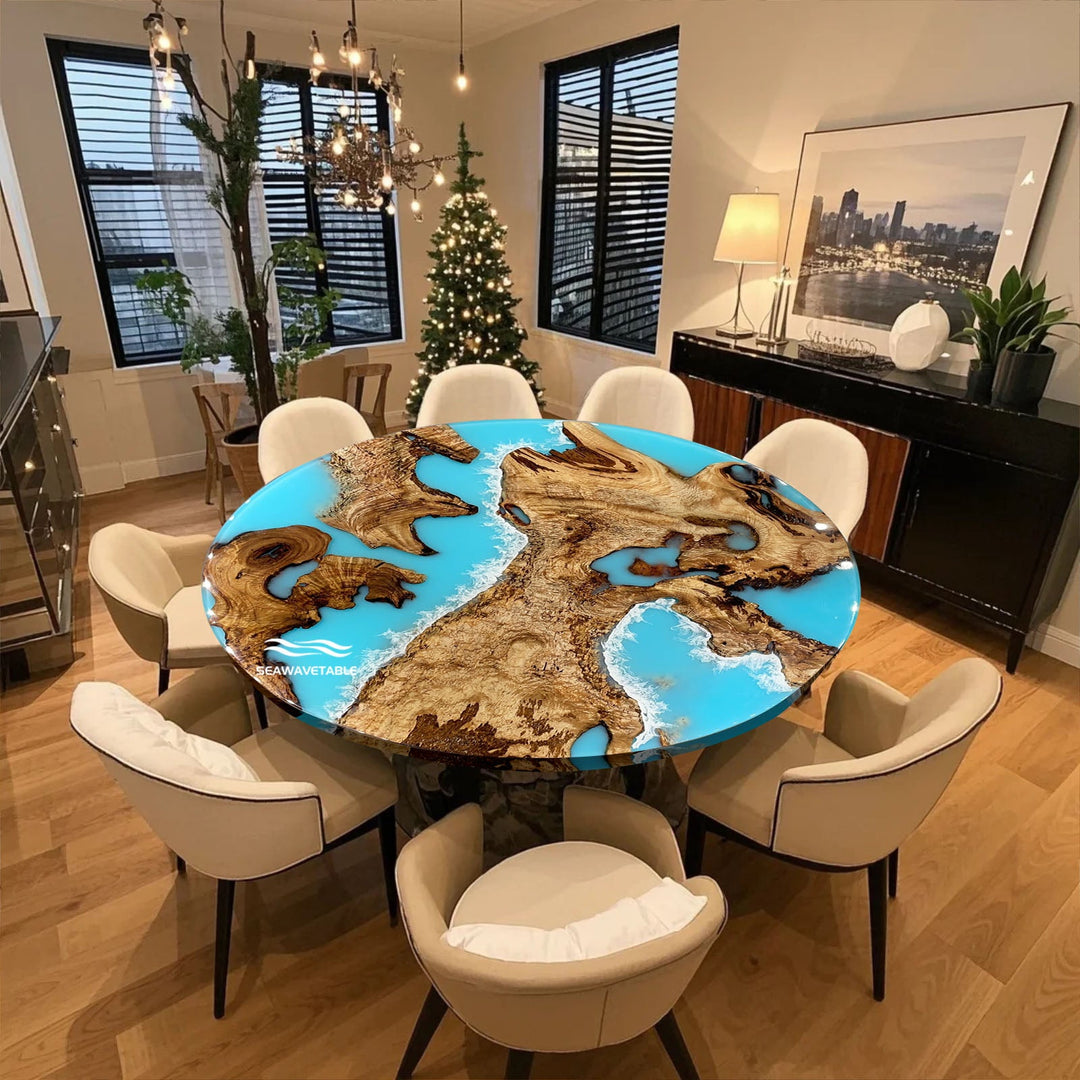
The closed view of the Contemporary Custom Black Walnut Expandable Epoxy Dining Table CRT-382 is helpful because it shows the idea clearly: a substantial walnut-and-resin table can remain visually controlled when the extension leaves are stored.

Plan the Fully Extended Room, Not Just the Extended Top
Opening the table changes more than its length. It changes chair locations, walking paths, and the distance to nearby furniture. A layout that works when the top is closed may become awkward when two leaves and several chairs are added.
Tape the fully extended outline on the floor as a second rectangle. Then add temporary chair positions with boxes or the chairs themselves. Check three things:
- The main route through the room. Guests should not have to squeeze between a chair and a wall every time they leave the table.
- Door and cabinet swing. An extension leaf should not place a chair in front of a frequently used door, drawer, or appliance.
- Serving space. If dishes arrive from the kitchen, leave a practical route for the person carrying them.
For an accessibility-minded check, the U.S. Access Board says accessible dining surfaces need clear floor space plus knee and toe clearance. Its standards also place accessible dining surfaces between 28 and 34 inches high. These rules apply to covered public settings, not automatically to every private home, but the underlying questions are valuable: can a person approach the table, fit comfortably under it, and move away without a base or another chair blocking the route?
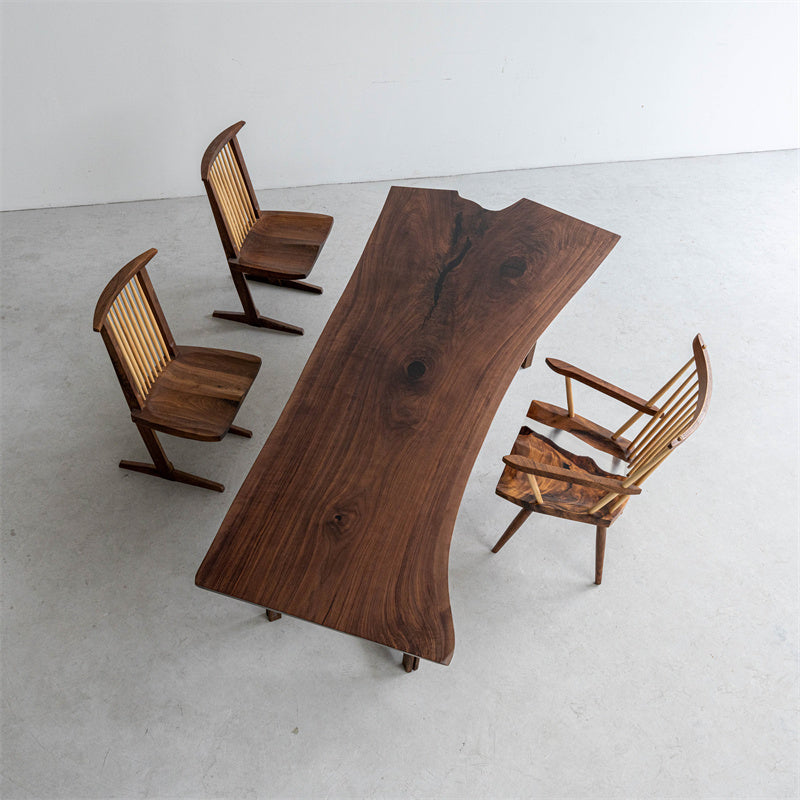
The fully opened images on the Handcrafted Solid Walnut Extendable Epoxy River Space-Saving Table CRT-383 offer another useful reference for discussing how the leaves change the total footprint.

Check the Leaves, Grain, and Resin as One Design
With a plain wood table, a leaf can look like a separate panel and still feel acceptable. An epoxy table is more visually demanding. Wood grain, resin color, and resin direction should make sense in both positions.
Ask to review the table closed and open before production. In the open view, check whether the resin path continues naturally across the leaves. Look at the direction and tone of the walnut. A perfect visual match is not realistic with natural wood, but the parts should feel intentionally related rather than assembled from unrelated designs.
Also confirm how the leaves are stored and handled. Integrated fold-out leaves save you from finding a closet for loose panels, but the mechanism needs space below the top. Removable leaves may give the designer more freedom, yet you need a safe, dry storage location and a practical way to carry them. Ask who can open the table comfortably, whether one person can do it, and whether the floor needs protection during the process.
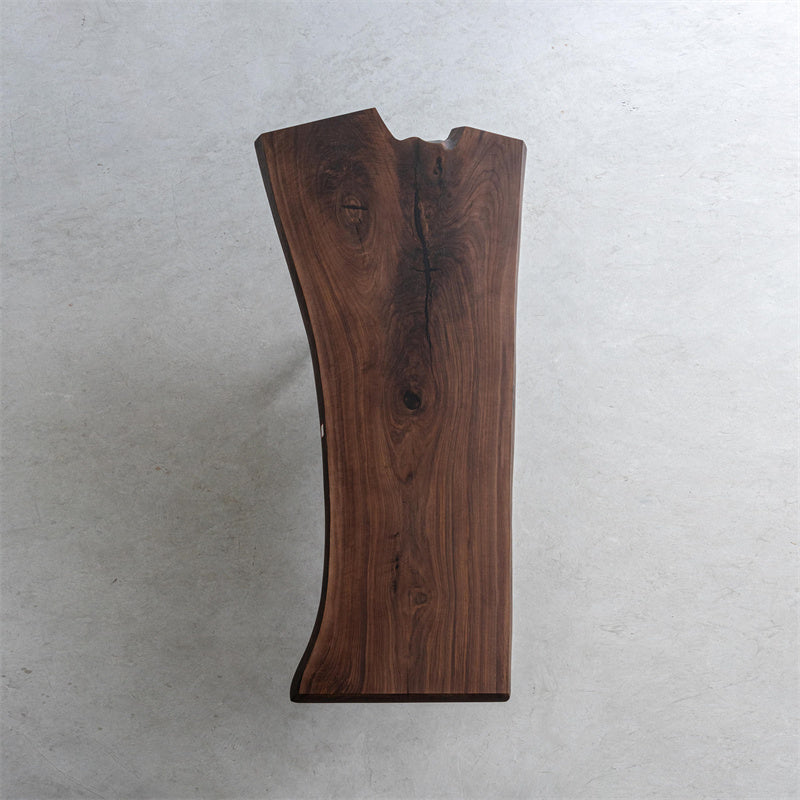
The Custom Walnut Extendable Dining Table with Black Epoxy River CRT-381 and the other models in the Custom Extendable Epoxy Resin Table collection give you three real product layouts to compare before choosing a direction.

Make Sure the Base Works in Both Positions
Extra tabletop length does not automatically create comfortable extra seats. The base can become the limiting factor. A leg or frame that is well placed when the table is closed may sit directly in front of a guest after the leaves are opened.
Ask for a top-view plan that shows the closed top, extended top, base, and every intended chair. Pay special attention to the new seats nearest the extension joints. Check knee room, foot room, and chair-arm clearance. If someone must sit with a metal member between their knees, that position should not be counted as a comfortable full-time seat.
Base stability also matters when the top grows longer. Do not assume that a familiar base style can simply be placed under a larger extended top. The maker should specify a base and extension system intended for the ordered size. Avoid making your own structural claims from photographs; ask for the actual approved drawing and mechanism details for your table.
This is also the moment to discuss floor level. An extension mechanism works best when the table stands evenly and does not rock. If your dining area crosses two flooring materials or has a noticeably uneven surface, mention it before ordering.

A Simple Way to Decide If an Extendable Table Is Right for You
An extendable dining table makes the most sense when your daily group is small, your occasional group is meaningfully larger, and your room can support both layouts. It is less useful if the table will stay open all year, if nearby doors make the extended layout impossible, or if the extra seats are blocked by the base.
Before you order, write down five items: closed dimensions, fully extended dimensions, number and type of leaves, comfortable seats in each mode, and the base position in each mode. Add the route the table must take through doors, halls, stairs, or elevators. A table that fits the dining room but cannot reach it is not a workable design.
The practical recommendation is simple: size the closed table for normal life, then verify the open table for your largest realistic gathering—not an imaginary maximum. Ask for drawings of both positions, with chairs and the base shown. That gives you a smaller everyday footprint without turning family dinner into a furniture-moving project.
If you are preparing a custom request, describe your room, daily seat count, occasional seat count, closed-size target, maximum open length, chair width, and any access limits. SEAWAVETABLE can then use those constraints to discuss a suitable extendable layout.
Frequently Asked Questions
How many people can an extendable dining table seat?
It depends on the usable edge length, chair width, base position, and room clearance—not only the advertised table length. Draw the chairs in both the closed and extended plans before deciding.
Is an extendable table good for a small dining room?
Yes, when the closed size leaves comfortable daily circulation and the room can still support the fully opened layout occasionally. Measure both conditions before ordering.
Are built-in fold-out leaves better than removable leaves?
Neither is always better. Built-in leaves are convenient and need no separate storage. Removable leaves may offer different design options, but they need careful storage and handling.
Will the epoxy design line up across the extension leaves?
It can be designed to read as one composition, but natural wood grain will always vary. Review a drawing or rendering of both table positions and confirm the intended resin path before production.
What should I send when asking for a custom extendable table?
Send room dimensions, photos, daily and occasional seat counts, chair width, closed and open size limits, doorway and stair measurements, preferred wood and resin look, and any mobility or access needs.
From the blog
View all