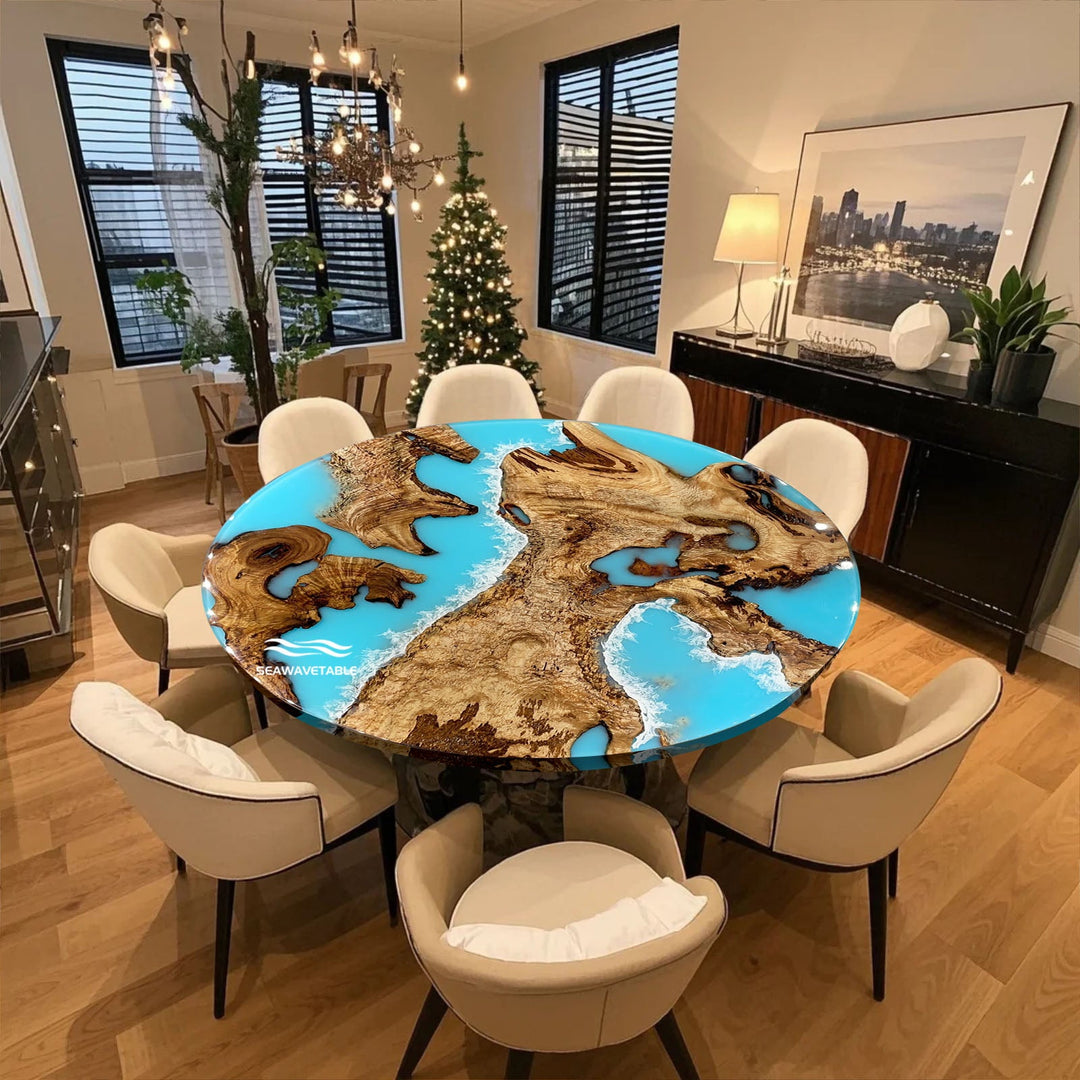



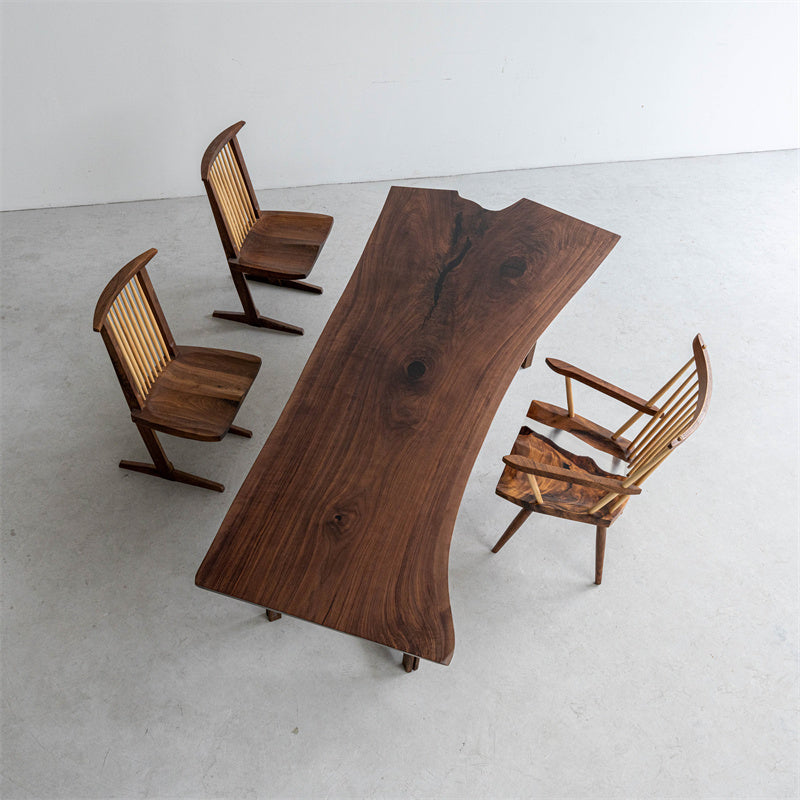
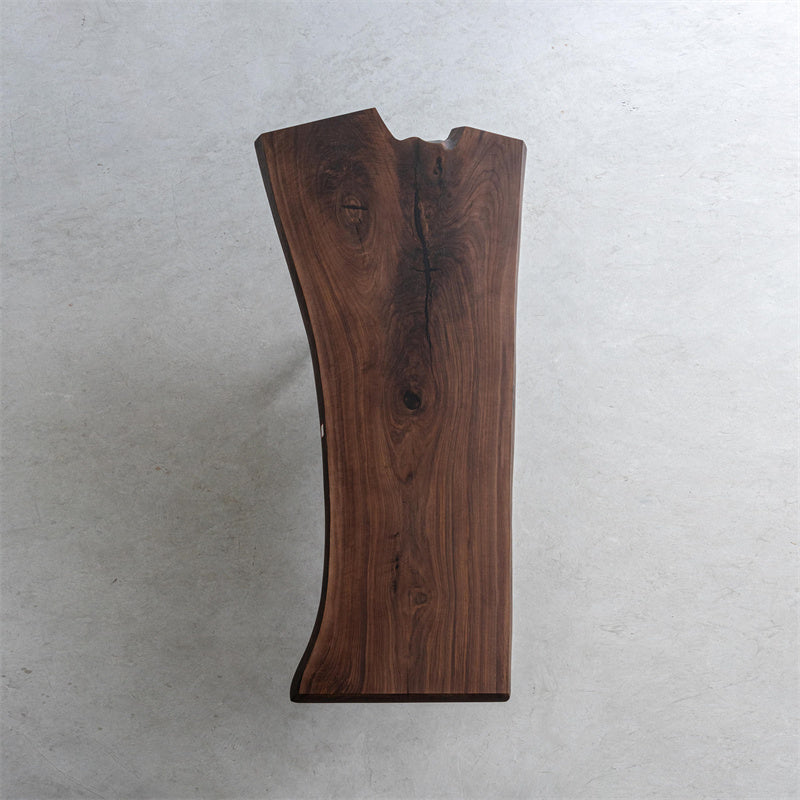
Resin Table Myths: What’s Misunderstood vs. What Actually Matters
Epoxy resin tables often come with strong opinions—both positive and negative.
Much of the confusion doesn’t come from bad intent, but from mixing real material behavior with unrealistic expectations.
In this section, we address the most common resin table myths using material science, woodworking principles, and real-world usage context, while also acknowledging what owners frequently discuss online.
❌ Myth #1: “Epoxy Resin Tables Always Yellow”
This concern is one of the most common—and one of the most misunderstood.
Epoxy resin is a polymer material, and like most polymers, it can experience UV-related color change over very long periods. However, the speed and visibility of yellowing depend heavily on formulation and exposure conditions.
According to material science references, UV exposure—not time alone—is the primary factor influencing resin discoloration.
🔗 Industry explanation on UV resistance (West System):
https://www.westsystem.com/instruction-2/epoxy-basics/
In online communities, owners often report noticeable yellowing only when tables are placed in direct sunlight for extended periods, such as next to large south-facing windows.
What actually matters:
Indoor placement, UV-stable formulations, and realistic environmental use—not the assumption that all resin yellows quickly.
❌ Myth #2: “Any Crack Means the Table Is Defective”
This myth usually comes from unfamiliarity with solid wood behavior.
Wood is a hygroscopic material—it absorbs and releases moisture depending on ambient humidity. As a result, expansion, contraction, and minor checking are normal, especially in large slabs.
This behavior is well documented in woodworking and material references.
Online discussions often blur the line between natural wood movement and structural failure, leading to unnecessary concern.
What actually matters:
Proper kiln drying, slab selection, and construction that allows for movement—not eliminating movement entirely.
❌ Myth #3: “Resin Tables Are Maintenance-Free”
Resin tables are often described as low maintenance—but that phrase is frequently misunderstood.
Compared to untreated wood, epoxy resin surfaces are more resistant to stains and moisture. However, they are still subject to scratches, heat marks, and surface wear, just like other finished furniture surfaces.
🔗 Furniture surface durability basics (Fine Woodworking):
https://www.finewoodworking.com/project-guides/finishing
Owners discussing long-term use online usually describe resin tables as easy to live with, not indestructible.
What actually matters:
Basic care habits—using coasters, avoiding excessive heat, and gentle cleaning—extend surface life significantly.
❌ Myth #4: “Thicker Resin Means Higher Quality”
Visually, thick resin pours can look impressive, which leads many buyers to equate thickness with quality.
From a materials standpoint, thicker epoxy pours introduce more heat during curing and require controlled conditions to avoid internal stress or imperfections.
🔗 Epoxy curing behavior and thickness considerations (West System):
https://www.westsystem.com/instruction-2/epoxy-basics/epoxy-chemistry/
Online discussions often focus on aesthetics, while professional builders focus on process control and structural balance.
What actually matters:
Engineering decisions, curing discipline, and appropriate thickness—not visual mass alone.
❌ Myth #5: “All Epoxy Resin Is the Same”
This misconception often stems from DIY or craft-level experiences.
Furniture-grade epoxy differs significantly from coating or hobby epoxy in terms of viscosity, cure time, and heat management—especially for deep pours used in tables.
Online Q&A platforms frequently reflect confusion caused by mixing these categories.
What actually matters:
Using epoxy specifically formulated for furniture-scale pours and long-term stability.
❌ Myth #6: “A Perfect Finish Means Long-Term Quality”
A flawless surface on delivery does not guarantee long-term performance.
Many furniture issues—if they occur—appear after months of real use, seasonal humidity changes, or temperature fluctuations.
Online owner discussions often reveal that durability is tied more to preparation and structure than showroom appearance.
What actually matters:
Material preparation, curing time, and construction integrity—not just visual perfection.
❌ Myth #7: “Resin Tables Are Fragile”
This myth often originates from extreme misuse examples rather than normal use cases.
When properly built, resin tables are widely used as dining tables, desks, and conference tables—handling daily wear comparable to other high-end furniture.
What actually matters:
Build quality, appropriate use, and realistic expectations—not viral failure clips.
✅ Final Perspective
When you look beyond marketing claims and isolated complaints, a consistent pattern emerges across Reddit and Quora:
Epoxy resin tables are neither miracle furniture nor risky novelties.
They are well-performing pieces when materials, process, and expectations align.
Understanding these myths helps buyers make calmer, more informed decisions—and appreciate resin tables for what they truly are.
From the blog
View all