


Not All Wood Slabs Are Equal: The Science Behind Choosing the Perfect Timber for Resin Work
(Part 2 of The Resin Table Masterclass Series)
If you’re thinking about getting (or commissioning) your first epoxy resin table — or building one yourself — wood selection matters more than most people realize. The wood slab isn’t just the canvas for resin: it’s the foundation that determines stability, durability, and how the resin ultimately looks. In this post, we dive deep into what makes a “good” wood slab for epoxy resin tables, and how to choose wisely so your piece lasts for decades.
🌳 Why Wood Matters — Not Just Looks, But Longevity
At first glance, many buyers focus on color, grain and aesthetic appeal — and that’s important. But beyond appearance, wood species and wood preparation drastically affect:
-
Dimensional stability (resisting warping, cracking, shrinking/expanding with humidity) Resin Society
-
How well resin bonds and cures — moisture or oils in wood can interfere with resin adhesion or cause bubbles. Coohom
-
The longevity and structural integrity of the finished table (heavy slabs, long pour depths, daily use) whiterabbitwood
In short: choosing the right species + a properly dried and prepared slab is likely the difference between a stunning heirloom table and a regrettable piece that warps or cracks in a few years.
🔎 Which Woods Work Best (And Why)
Here are some of the most-recommended wood species for epoxy resin tables — each with different strengths depending on the style, budget, and end-use.
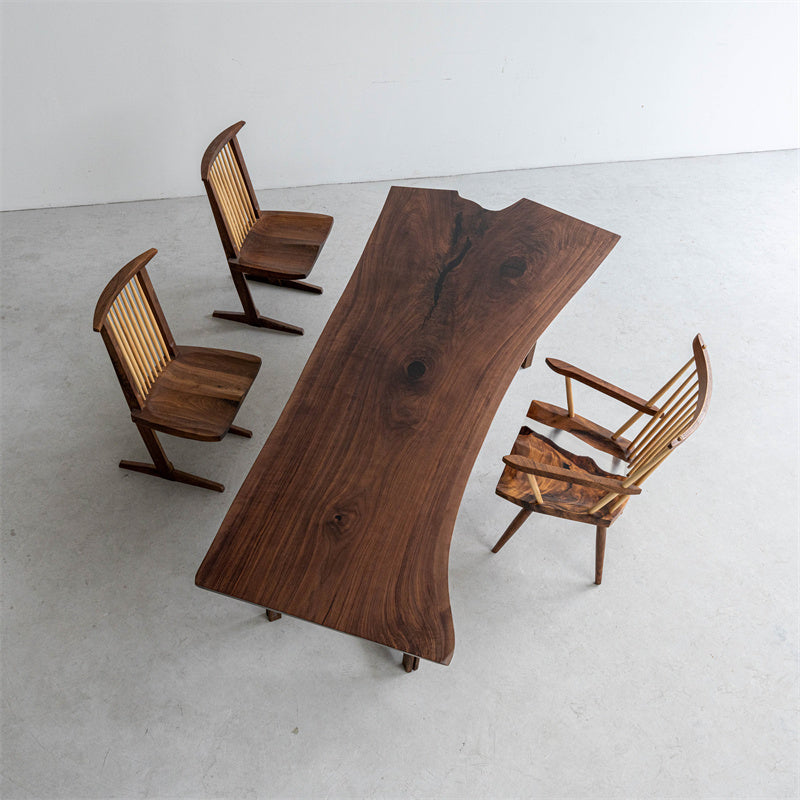
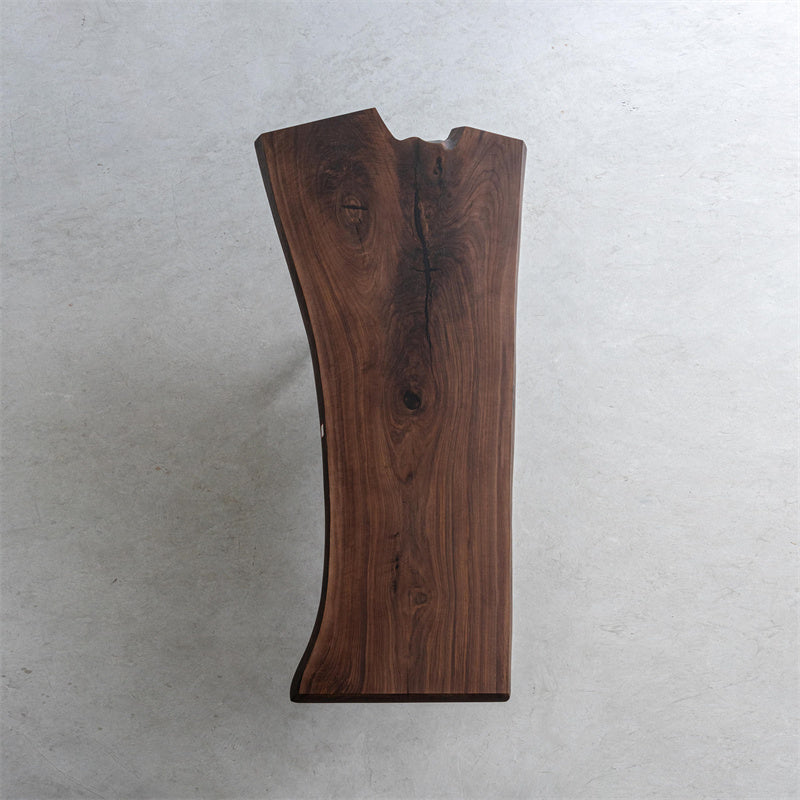
Black Walnut
Black Walnut is known for its deep, rich grain and luxurious dark color, making it one of the most visually striking woods for resin tables. Its natural contrast pairs beautifully with clear, tinted, or metallic epoxy, which is why it’s a top choice for high-end river tables and premium dining pieces.
Beyond aesthetics, kiln-dried Black Walnut offers excellent durability and stability. When properly processed, it is highly resistant to warping, cracking, and seasonal movement — a key advantage for large resin slabs. Its versatile grain character also allows it to complement a wide range of epoxy styles, from crystal-clear rivers to deep ocean blues and shimmering metallic pours.
Because of its balance of beauty and structural reliability, Black Walnut is widely considered one of the best all-around woods for luxury resin furniture, especially when the goal is to create a dramatic, statement-making centerpiece.
Best for: high-end dining tables, resin river designs, artistic statement furniture.
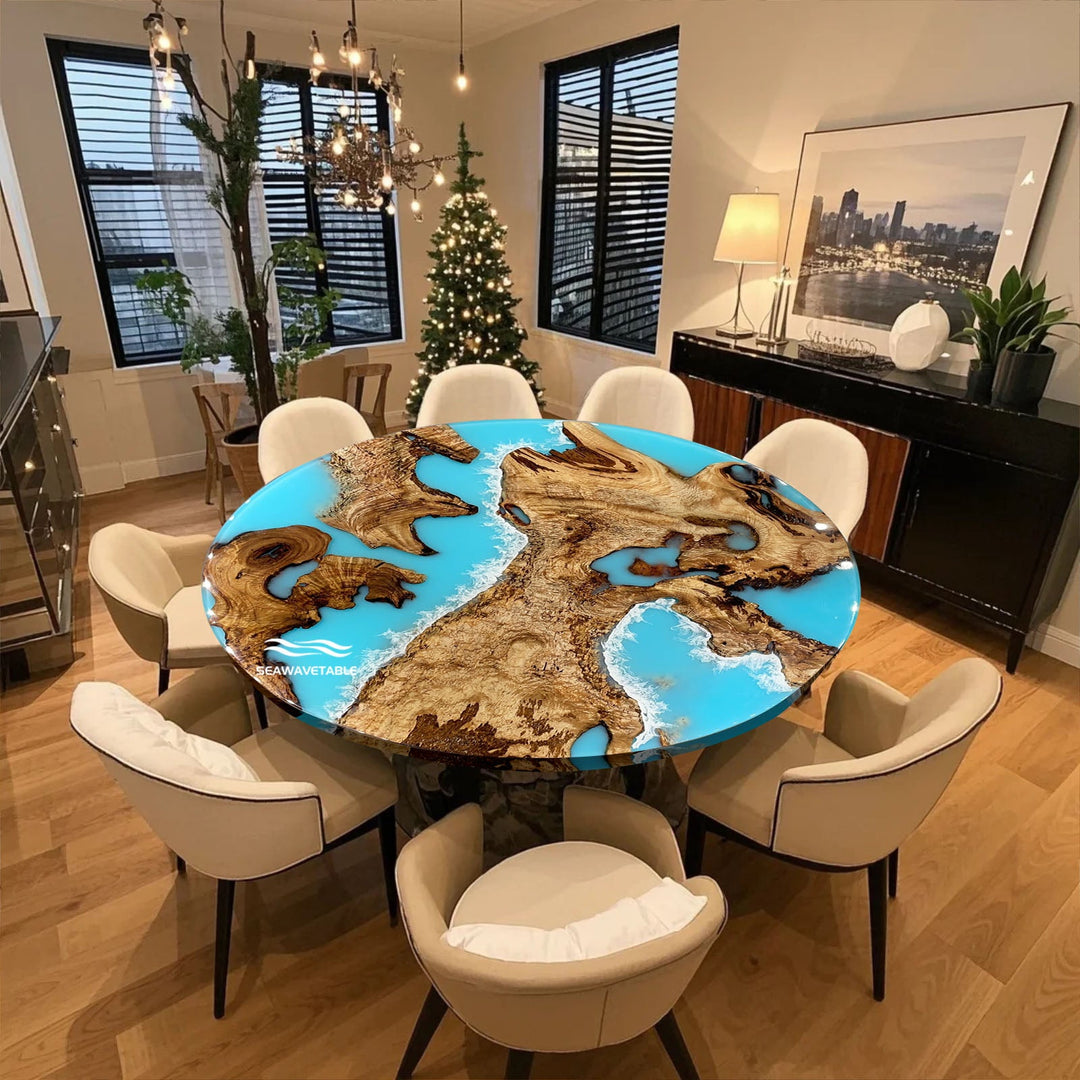
Golden Camphor
Warm golden tone with shimmering grain patterns — perfect for luxurious, elegant, or nature-inspired interior designs.
Its unique swirling grain and subtle chatoyance make Golden Camphor visually striking even before resin is added. When paired with translucent or smoky epoxy, the table often takes on a premium, high-end appearance.
Although not as dense as walnut, Golden Camphor is stable when properly dried and works extremely well for artistic statement pieces where the wood’s natural beauty plays a major role.
Ideal if you want a resin table that feels organic, refined, and slightly exotic — rather than modern-minimalist.
Best for: luxury interiors, natural or translucent resin styles, statement dining tables or art-piece coffee tables.
Poplar
Lightweight, soft-toned, and highly workable — poplar is a popular choice for budget-friendly or artistic epoxy builds where resin takes center stage.
Poplar’s neutral grain and pale color allow tinted, metallic, or opaque resin designs to stand out dramatically, making it excellent for ocean-style pours, bold pigments, or large color-block epoxy.
While not as hard or durable as walnut, camphor, or oak, poplar remains stable for resin work when properly kiln-dried, and is often chosen for large slabs due to its affordability and availability.
If your focus is color creativity, bold epoxy styles, or large decorative slabs rather than a heavy-use table — poplar is a practical and versatile choice.
Best for: creative resin art tables, ocean-style epoxy designs, budget-friendly builds, and large-format decorative slabs.
✅ What “Properly Prepared Wood Slab” Means
Even top-tier wood species can go wrong if not prepared properly. Here’s what you (or your maker) must ensure:
-
Kiln-dried slabs with low moisture content — ideally < 10–12%. Moisture causes warping, cracking, resin adhesion problems.
-
Flat and stable slab surface — planed, sanded, bark removed (if using live-edge, bark might be preserved, but edges sealed).
-
Stabilized cracks / voids / knots — if using pieces with natural voids (common in burl or live-edge slabs), ensure they’re sealed or stabilized before pour.
-
Compatibility with epoxy resin — avoid overly resin-phobic woods (very oily or resin-interfering species) unless properly sealed/prepped.
One guide even confirms that using kiln-dried hardwood slabs is the safest route for resin work.
🧐 What to Ask / Check When Buying a Slab (Not Just “Looks Good”)
Before you say “yes” to a slab for epoxy resin work — especially for a live-edge or custom resin table — ask your maker / supplier these critical questions:
-
Is the slab kiln-dried? What’s the current moisture content? (should be below ~10–12%)
-
Has the slab been flattened, planed, sanded, and inspected for internal defects (knots, cracks, voids)?
-
Is the grain and wood species suitable for resin — i.e. stable hardwood rather than softwood or oily exotic wood?
-
Are cracks / voids stabilized or sealed (if present)?
-
What thickness is the slab? (Thicker slabs — e.g. 1.5″–3″ — are often better for deep resin pours and structural stability)
⚠️ What to Avoid — Common Mistakes & “Red Flags”
-
Avoid green wood / air-dried wood without moisture testing — these are prone to warping/shrinking after resin work, causing cracks or separation. Many DIYers on forums warn against it.
-
Avoid softwoods or overly porous woods for dining tables — resin may not bond strongly, or wood may dent, absorb moisture, or degrade under stress.
-
Avoid slabs with unstabilized cracks / big voids / bark — unless properly prepped and stabilized first. Otherwise, you risk uneven curing or structural instability.
As one DIYer from a woodworking community warns:
“I used too much epoxy … I had very large epoxy leak during initial pour.” Reddit
This highlights that even minor prep mistakes (slab not sealed, mold leaks, unstable wood) can lead to major issues.
🧭 Conclusion — Choose Wisely, Build Once
Choosing the right wood slab for your epoxy resin table is far more than aesthetic — it determines whether your table becomes a future heirloom or a short-lived project. By prioritizing stable hardwood species, proper drying and preparation, and careful slab inspection, you set the foundation for a stunning, durable resin table that looks good and lasts.
From the blog
View all