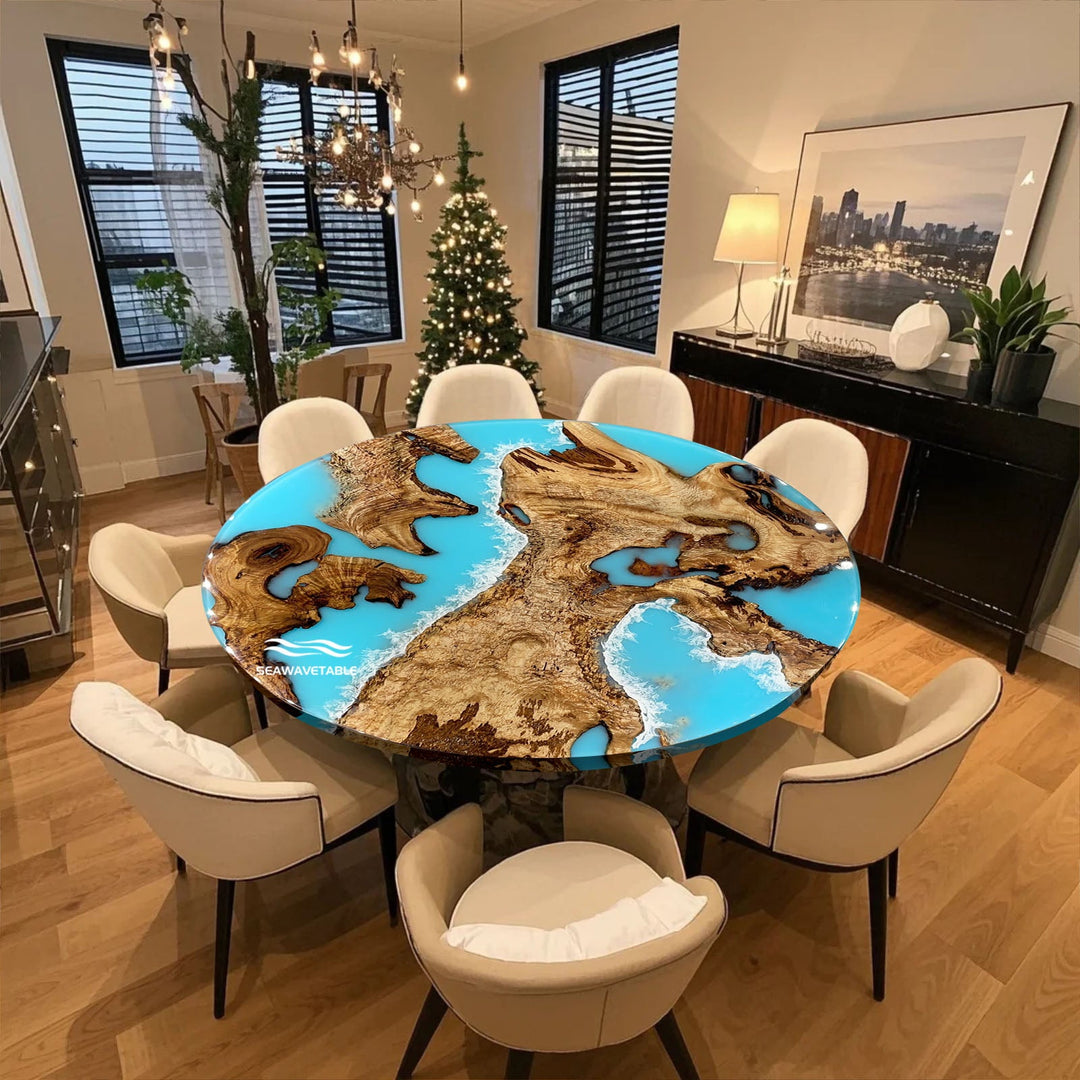





How to Evaluate a Resin Table Before Buying (A Practical Buyer’s Guide)
By the time most buyers consider an epoxy resin table, they’ve already seen the photos, watched the videos, and fallen in love with the look.
What’s harder—and far more important—is knowing how to evaluate what’s behind the surface.
This guide walks through the most reliable indicators of quality before purchasing a resin table, using woodworking principles and material science rather than marketing claims.
1. Start With the Wood, Not the Resin
Resin often gets the spotlight, but the wood slab is the structural backbone of the table.
Poorly dried or unstable wood can lead to cracking, warping, or joint stress over time—regardless of how good the resin looks.
Hardwoods commonly used for resin tables (such as walnut, maple, poplar, or camphor) differ significantly in density, movement, and stability.
What to look for as a buyer:
-
Kiln-dried slabs (not air-dried only)
-
Visible grain consistency, not overly stressed end checks
-
Transparency from the maker about wood origin and drying process
2. Understand Which Epoxy Is Being Used
“All epoxy” is not a single category.
Furniture-grade resin tables require deep-pour epoxy, which cures slowly, generates less heat, and reduces internal stress in thicker applications.
Using the wrong epoxy can cause clouding, brittleness, or long-term surface issues.
What to look for:
-
Clear disclosure of epoxy type (deep pour vs coating)
-
Controlled pour depth rather than extreme single pours
-
Proper curing time between pours
3. Thickness Is Not a Quality Metric by Itself
Many buyers assume thicker resin automatically means better quality.
In reality, thickness is a design choice, not a quality guarantee.
Excessively thick resin can introduce curing heat issues if not handled correctly, while thinner, well-engineered pours can perform better long-term.
🔗 Epoxy curing chemistry explained (West System):
https://www.westsystem.com/instruction-2/epoxy-basics/epoxy-chemistry/
What to look for:
-
Balanced proportions between wood and resin
-
No signs of trapped bubbles or internal haze
-
Even hardness across the surface
4. Examine the Finish, Not Just the Gloss
A mirror-like surface looks impressive on delivery—but finish quality is about durability, not shine.
Professional furniture finishes account for abrasion resistance, heat tolerance, and repairability over time.
🔗 Furniture finishing fundamentals (Fine Woodworking):
https://www.finewoodworking.com/project-guides/finishing
What to look for:
-
Smooth but not overly “plastic” feel
-
No swirl marks, burn spots, or soft areas
-
Clear guidance on maintenance and repair
5. Ask How the Table Is Designed to Handle Movement
Wood moves. Resin does not—at least not in the same way.
Quality resin tables are designed to accommodate seasonal wood movement, rather than trying to eliminate it completely.
What to look for:
-
Floating base or slotted mounting systems
-
No rigid constraints locking the slab unnaturally
-
Evidence the maker understands wood behavior, not just aesthetics
6. Evaluate the Base and Structural Support
The tabletop gets the attention, but the base determines long-term usability.
A heavy resin table requires proper load distribution to prevent sagging or stress points.
What to look for:
-
Adequate leg spacing for slab length
-
Reinforcement where needed (steel C-channels or structural design)
-
Stable attachment method that allows slight movement
7. Look for Realistic Care Guidance (Not “Zero Maintenance” Claims)
High-quality builders are honest about care.
If a seller claims a resin table requires no maintenance and is completely immune to scratches or heat, that’s usually a red flag.
What to look for:
-
Clear care instructions
-
Repair or refinishing options
-
Willingness to explain long-term expectations
Final Buyer Insight
A well-made resin table is not judged by resin depth, shine, or viral appeal.
It’s judged by how well materials, process, and structure work together over time.
When you evaluate a resin table through this lens—wood quality, epoxy choice, finish discipline, and structural design—you move from emotional buying to confident ownership.
From the blog
View all