Are Epoxy Resin Tables Just a Trend or Something That’s Here to Stay?
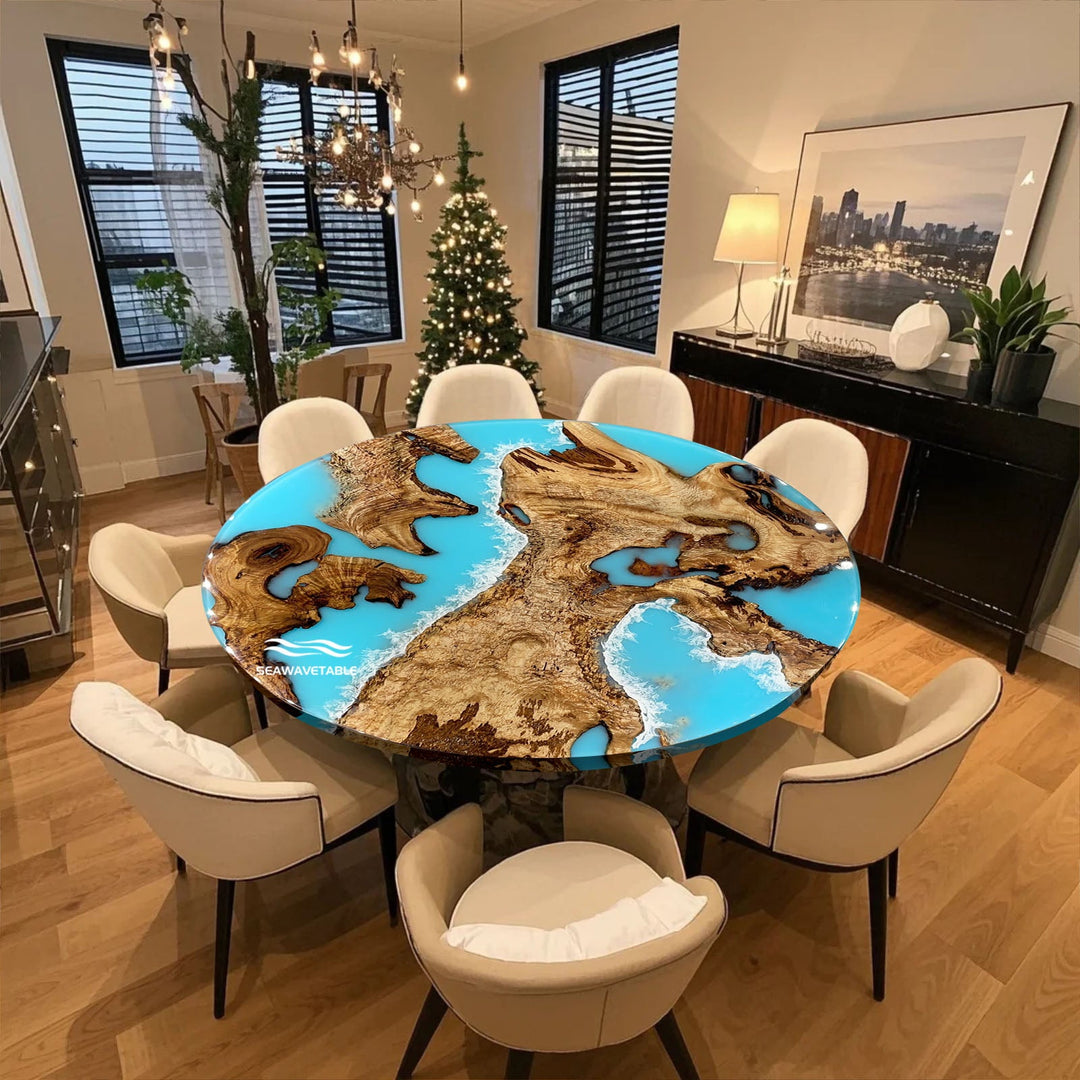
Walk into a modern home showroom today and there’s a good chance you’ll see one of them — an epoxy river table sitting right in the middle of the room.
Sometimes the resin is crystal clear, sometimes it’s deep black or ocean blue. The wood edges look raw and natural, almost like the table was cut straight from a tree and frozen in time. And right between the slabs, that glossy resin “river” catches the light in a way that regular wooden tables simply don’t.
It’s easy to see why people notice them.
But the more common these tables become, the more people start asking the same question:
Are epoxy resin tables actually timeless pieces of furniture, or are they just another interior design trend that will fade away in a few years?
Honestly, the answer isn’t completely black and white.
Where Epoxy River Tables Really Came From
A lot of people assume epoxy furniture appeared recently because of social media. And yes, platforms like YouTube and Instagram definitely helped push the trend forward.
But epoxy resin itself has been around for a long time.
For decades it’s been used in industries that require extremely strong bonding materials — construction, marine engineering, electronics, and more. The American Chemical Society explains that epoxy resins are valued for their durability and resistance to moisture and wear.
What changed in the early 2010s was how craftsmen started experimenting with it in furniture making.
Instead of discarding wood slabs with cracks or uneven edges, woodworkers realized those imperfections could actually become part of the design. By placing two slabs side by side and filling the gap with resin, the result looked like a flowing river running through the middle of the table.
That simple idea turned into what we now call the river table.
Why People Are Drawn to Them
After seeing dozens of epoxy tables in real homes, one thing becomes clear pretty quickly: people rarely buy them just because they need a table.
They buy them because the table feels special.
Unlike factory furniture where thousands of identical pieces exist, every epoxy table ends up slightly different. The wood grain alone guarantees that. Even if the design is similar, the final result never looks exactly the same.
Design platforms like ArchDaily often talk about how modern interiors are moving toward materials that feel natural and imperfect rather than perfectly manufactured.
That idea shows up clearly in resin tables. The wood remains organic and unpredictable, while the resin adds something sleek and contemporary.
It’s a strange combination at first, but it works.
The “Centerpiece” Effect
There’s another thing I’ve noticed about epoxy tables.
They rarely stay in the background.
Put a traditional dining table in a room and most guests probably won’t comment on it. But when a river table sits in the middle of the space, people tend to stop and look for a moment.
Questions usually follow.
“Is that real wood?”
“How did they make the river part?”
“Where did you find this?”
That kind of reaction is exactly why many homeowners treat epoxy tables as statement pieces.
If you're considering one for a dining area or office, browsing a few real designs helps understand the range of styles available:
https://yourstore.com/collections/epoxy-river-dining-tables
Why Some Designers Still Call It a Trend
Not everyone in the design world is convinced resin tables will remain popular forever.
One reason is simply exposure. When a style suddenly appears everywhere online, it can start to feel temporary. Social platforms tend to amplify trends quickly, and once something becomes extremely visible, people often assume the popularity won’t last.
Pinterest, for example, tracks design trends each year through its trend forecasting reports:
https://business.pinterest.com/pinterest-predicts/
Another issue comes down to quality.
As demand for epoxy furniture grew, more manufacturers entered the market. Some produce excellent work, but others focus on speed and cost rather than craftsmanship.
When resin is poured too quickly or wood isn’t properly dried, problems can appear later:
air bubbles in the resin
warping wood
uneven surfaces
When buyers encounter poorly made pieces like that, it’s easy to assume the whole category is just a short-lived trend.
The Part People Often Overlook
What often gets lost in the trend discussion is how much craftsmanship goes into a well-made resin table.
Creating one isn’t simply a matter of pouring resin between two boards.
The wood has to be carefully selected and dried. Sometimes slabs sit in a kiln for weeks before they’re ready. After that, the resin pouring process itself requires patience, because large pours often happen in stages.
Then comes sanding. And polishing. And finishing.
When done properly, the table can take weeks to complete.
At that point, the finished piece is closer to custom furniture than something mass-produced.
One Big Advantage: Design Flexibility
Another reason epoxy tables might stick around longer than expected is their flexibility.
Traditional tables don’t leave much room for creativity. A wood table is usually just… wood.
Resin changes that.
Designers experiment with different colors, pigments, and even materials embedded inside the resin. Some pieces use metallic powders, stones, or layered translucent effects.
Modern design publications like Design Milk regularly showcase experimental furniture pieces using resin and natural wood together.
The design possibilities are surprisingly wide.
So… Trend or Not?
Maybe the better question isn’t whether epoxy tables are trendy.
Almost every design style is trendy at some point.
The real question is whether the concept behind them — combining natural wood with modern materials — will continue evolving.
Right now, that combination seems to resonate with a lot of homeowners. People want furniture that feels unique, not something that looks identical to what everyone else owns.
And resin tables definitely deliver that sense of individuality.
If you’re curious what custom versions look like, many furniture makers now offer made-to-order designs where buyers choose the wood slab, resin color, and table size themselves:
https://yourstore.com/pages/custom-epoxy-river-table
Final Thoughts
Interior design trends always move in cycles.
Minimalism fades, then returns. Rustic styles come back in different forms. Materials get rediscovered in new ways.
Epoxy river tables probably fit somewhere in that pattern.
Some versions will come and go, especially lower-quality mass-produced ones. But the idea behind them — turning natural wood into functional art — is likely to stick around much longer.
And if you’ve ever seen a beautifully crafted resin table in person, it’s not hard to understand why.
From the blog
View all