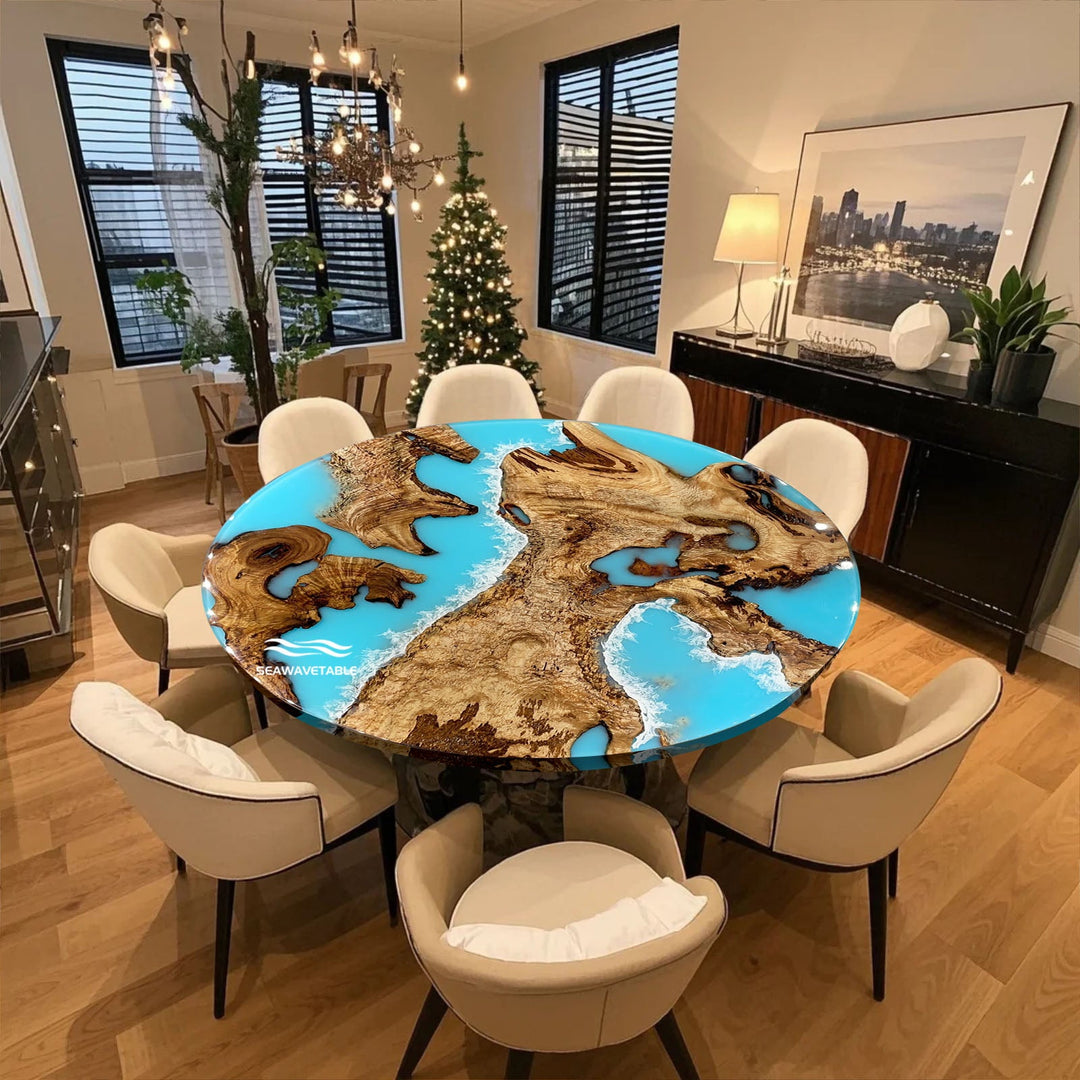



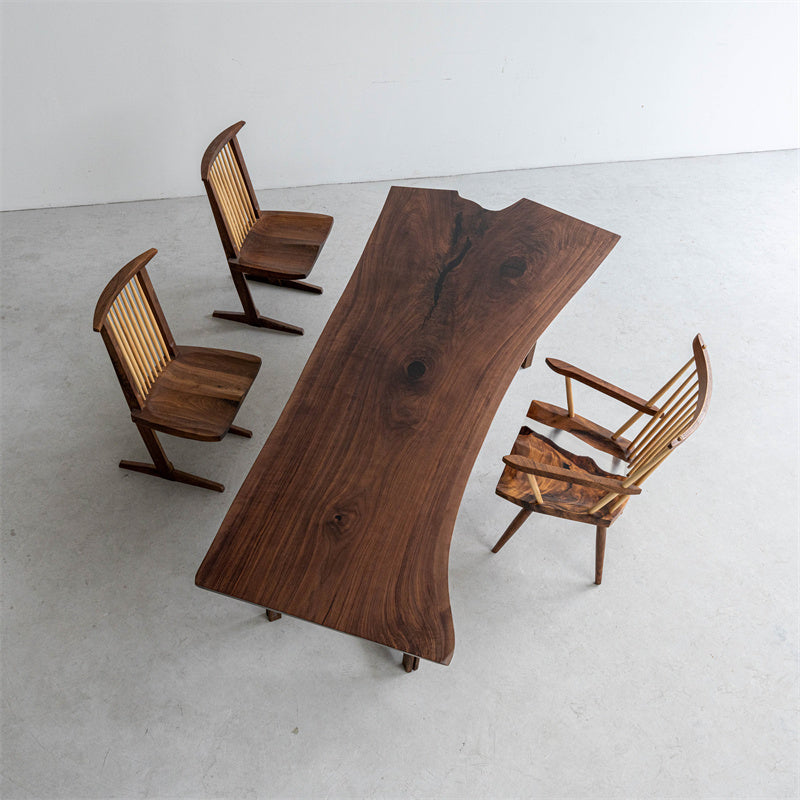
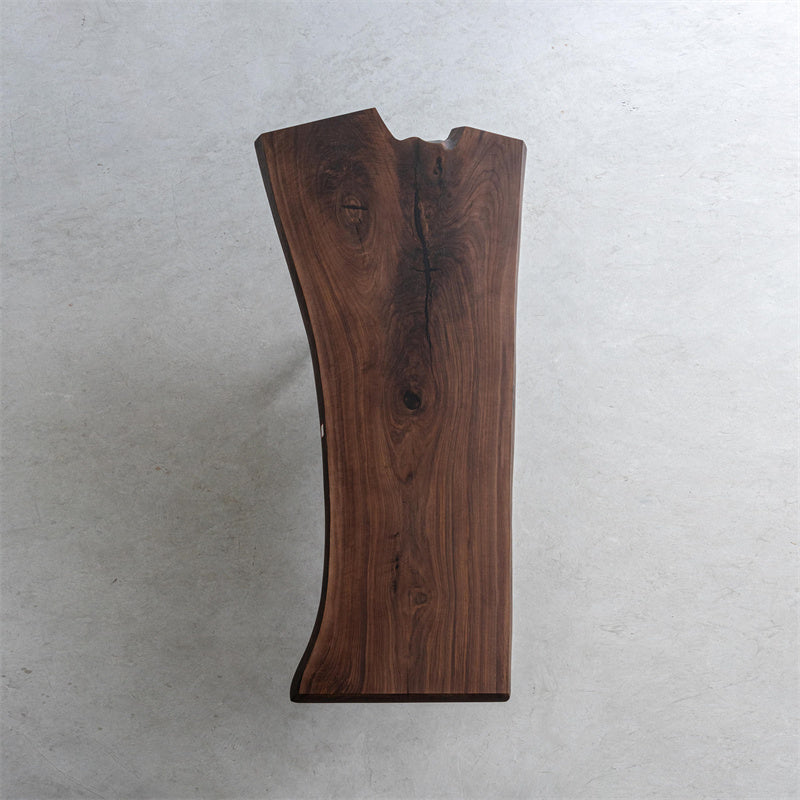
Can You Design an Epoxy River Table Without Making It Look Like a “River”?
Yes. An epoxy table does not need a blue strip between two wood slabs. The easiest way to avoid the river look is to change where the resin goes, not just its color. Put resin around the edges, inside small natural holes, on one side, or around flowers and other decorations. Let the wood cover most of the tabletop, and do not create one long resin line through the center. The finished table will feel modern without looking like a river.
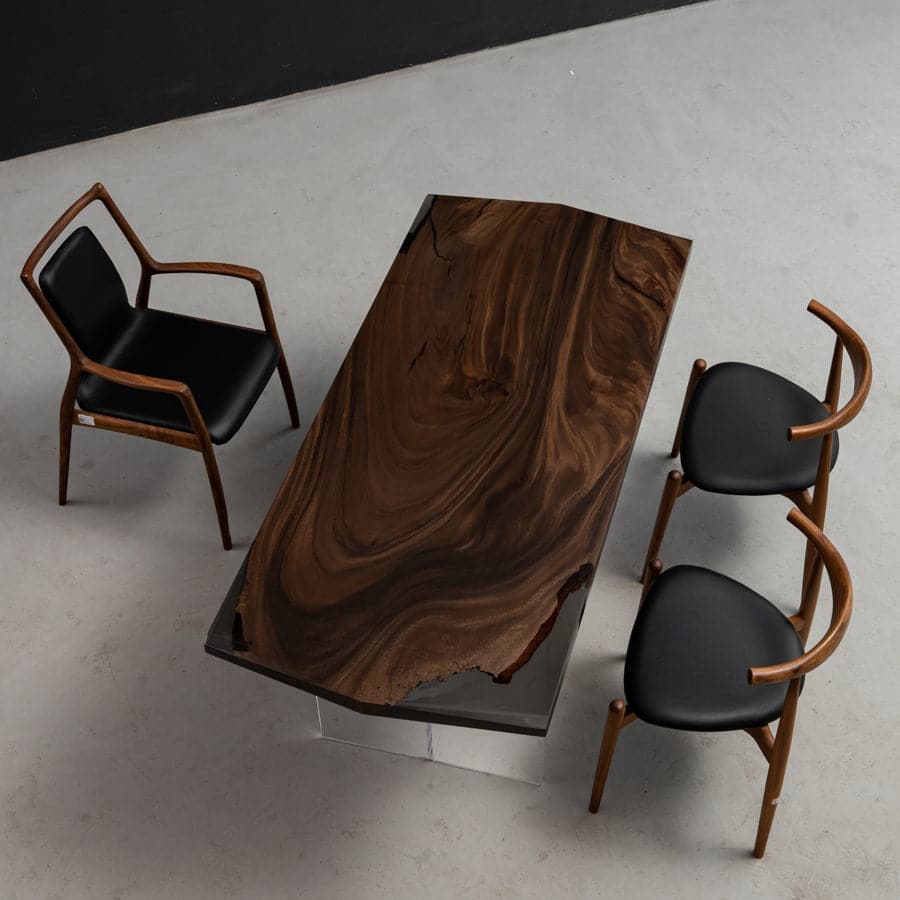
Yes—Change the Composition, Not Just the Color
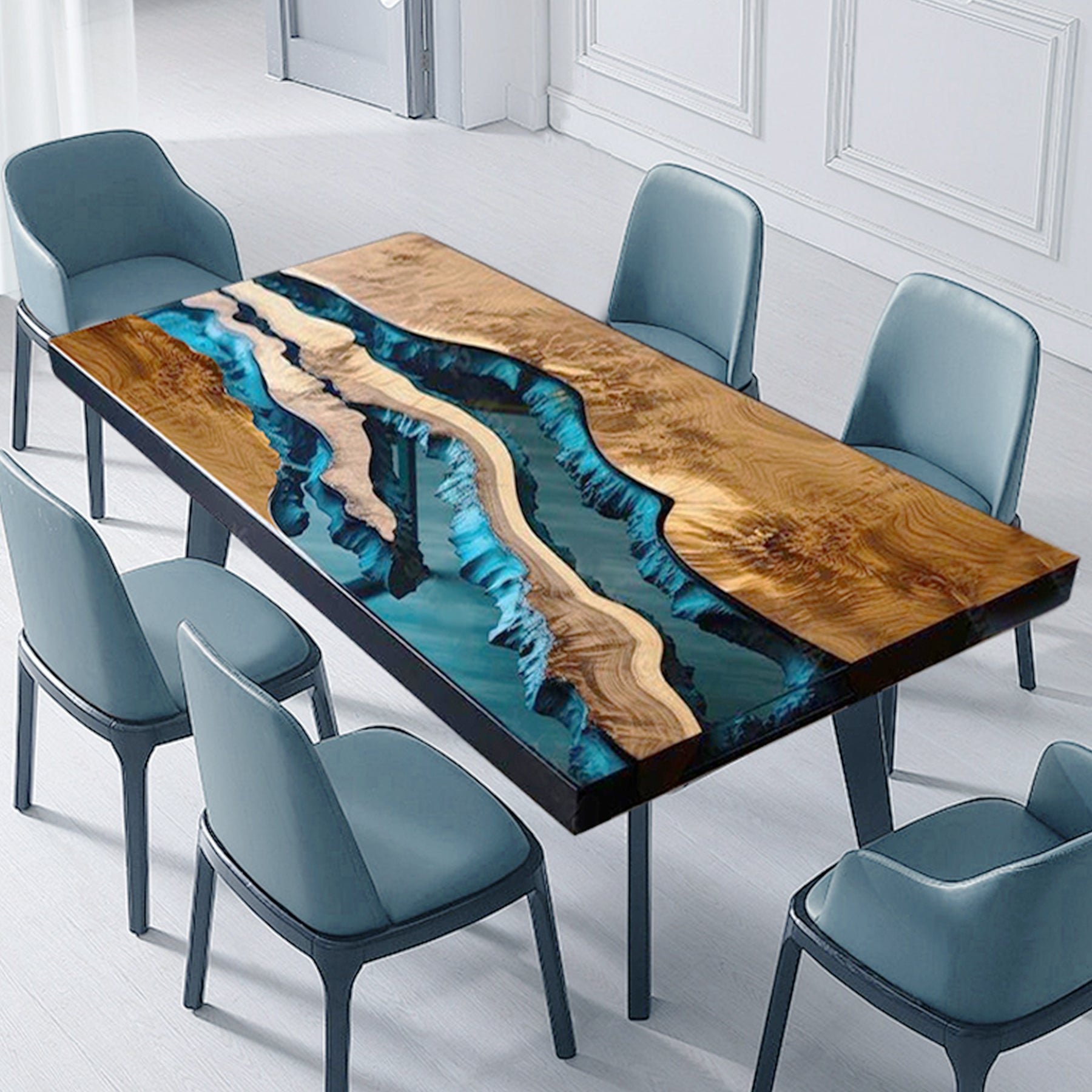
Many tables still look like rivers even when the resin is not blue. A long strip of black, white, or clear resin between two wood slabs still looks like water between two banks. If you want a different style, start by changing the resin layout.
Decide what people should notice first. If you want them to notice the grain, natural color, or shape of a special slab, give most of the tabletop to the wood. Use resin only where it has a clear job. It can complete a straight outer edge, fill a small hole, hold flowers in place, or fill the spaces around several pieces of wood. Just make sure those resin areas do not join into one long path.
Simple choices usually work best. Clear or lightly tinted resin, a small number of decorations, and one consistent edge style can make the table look calm and well planned. Whatever layout you choose, the dining surface must stay flat, smooth, and easy to clean. Wood, resin, flowers, crystals, and other items must all sit at the same level or be fully sealed below the surface.
Let Wood Lead and Move Resin to the Perimeter
The simplest non-river approach is edge fill. Start with one visually complete slab and use resin only where the natural edge falls inside the desired rectangular or softly rounded outline. The CRT-043 Ice Crystal Conference Table offers a useful product-grounded reference: its wood mass remains primary while transparent details interact with the outer boundary.
Edge resin does not split the tabletop in half. Instead, it frames the wood or fills missing parts around it. A missing corner can become a clear window. An uneven natural edge can sit inside a straight resin border. Two small resin areas can appear on opposite sides without connecting.
Think about how the table will look from across the room. A narrow border looks clean and bold. Several separate resin pockets look more natural. Dark gray makes the wood outline easy to see. Clear resin can make the natural edge appear to float. Warm smoky resin creates a softer look. Tell the maker that every natural edge must be sealed and finished at the same height as the wood. There should be no raised bark or low resin spots.

Use Resin as a Local Repair or a Mineral Field
Resin can work like a small decorative fill instead of a landscape. Knots, short cracks, and natural holes can become separate details. Filling two or three small areas adds interest without creating a flowing line. Smoke, amber, dark gray, or nearly clear resin usually blends well with the wood.
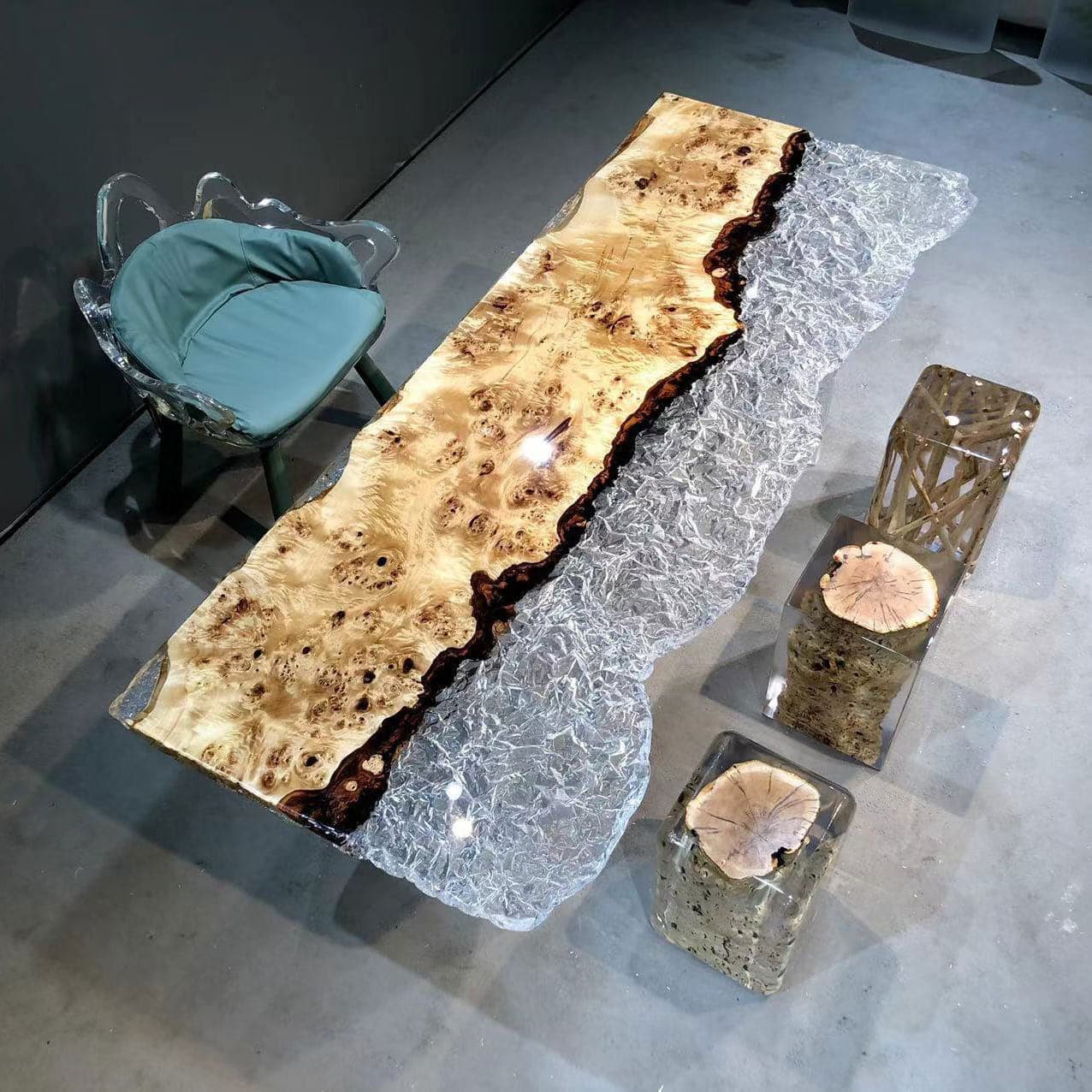
A more expressive option is a mineral or ice-crystal field placed to one side. The CRT-094 Ice Crystal Dining Table Top demonstrates how pale burl-like wood and a crystalline resin treatment can share the surface. To avoid a river reading, place the translucent field along one broad side, in a corner, or around an irregular wood peninsula—not as a stripe between matching slabs.
The crystal texture should only be something you see, not something you feel. It must stay below clear resin, while the finished top remains completely level. This keeps plates and glasses stable and makes the table easier to clean.
Build a Scatter, Border, or Embedded Composition
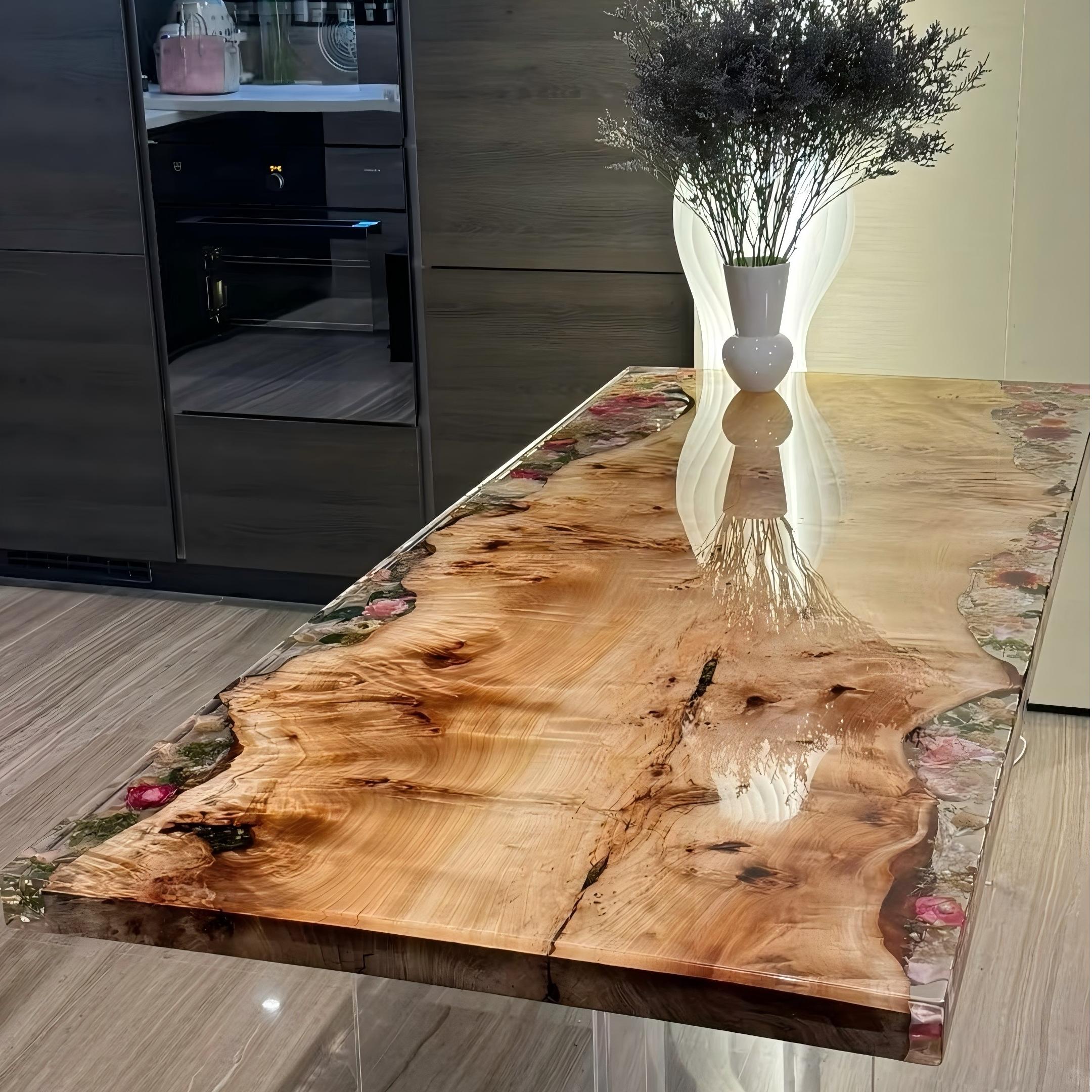
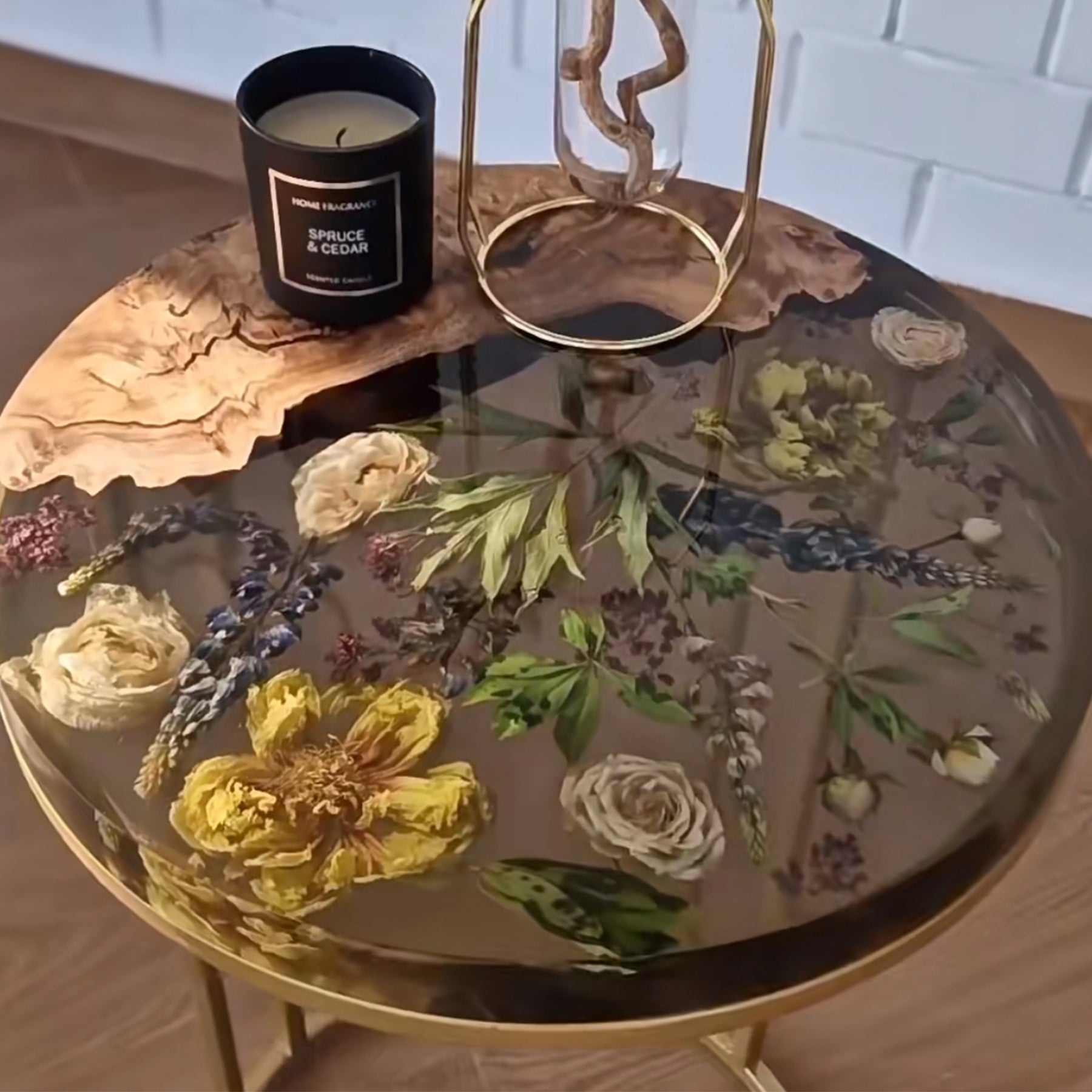
Decorations inside the resin can replace the river idea completely. Flowers, leaves, shells, small metal pieces, or meaningful objects can form a border, a simple scattered pattern, a corner group, or a gentle change from dense to sparse. The CRT-187 Poplar Art Flowers Epoxy Table is a useful real-product example, and the Flowers Resin Tables collection shows more ways to make flowers the main feature.
Leave plenty of open wood on a dining table. Too many decorations may look busy after you add plates, serving dishes, and chairs. A border keeps the center simple. Flowers in two opposite corners can create balance. A small curved group can point toward the most beautiful wood grain.
Choose decorations that are thin enough to seal safely and that have colors you want to keep. Confirm their positions before the resin is poured. Every item must stay fully below the final surface, never on top of it. Ask for a simple overhead preview so you can check the spacing before production begins.
Lower the Contrast and Control the Finish
The layout decides whether the table looks like a river, but color also matters. Bright solid blue quickly makes people think of water. Clear, smoky gray, soft amber, or a color taken from the wood will usually look quieter and less like a river.
The CRT-135 Clear Epoxy Dining Table is useful when considering transparent areas, while the Custom Clear Epoxy Tables collection provides additional product context. For a distinctly non-river composition, translate those material cues into distributed islands, edge voids, or a quiet surrounding field rather than one linear gap.
Finish changes perception too. A high-gloss clear area creates depth and reflections; a satin treatment can make the same geometry feel calmer. Confirm the intended sheen across both wood and resin so the top reads as one plane. Epoxy should also be protected by an appropriate finished coating and sensible placement: manufacturer guidance notes that unprotected epoxy can degrade under ultraviolet exposure. Avoid promises such as “UV-proof,” and keep strong direct sun, heat, and harsh cleaners in mind during everyday use.
Turn the Idea Into a Customization Brief
A clear custom request should explain where everything goes, not only list colors. For example: “I want walnut to cover about three quarters of the top. Use clear smoky resin only around the outside edge and in two natural holes. Do not make a resin channel through the center.” Then add the table size, edge shape, gloss or satin finish, room lighting, and the product photo you want to use as a reference.
Then provide a marked overhead sketch. Label every resin zone and state whether it may connect to another zone. Ask for an overhead composition preview before the final pour, especially when using inclusions. If you need more directions before briefing a maker, SeaWaveTable’s article on creative epoxy-table customization ideas offers adjacent inspiration; your brief can distinguish itself by explicitly rejecting a central channel.
Finally, record the non-negotiables: the entire tabletop must be smooth and level; no wood, bark, crystal, flower, or resin detail may protrude; the finished outline and any visible base must match the approved design. These constraints turn a mood into a buildable direction and help the final piece feel intentional rather than like a river table with different coloring.
Sources and Technical References
- USDA Forest Products Laboratory, Wood Handbook: Wood as an Engineering Material, for wood moisture response and dimensional-change context.
- Canadian Conservation Institute, Basic Care—Furniture and Objects Made of Wood, for furniture environment, light, humidity, handling, and care guidance.
- WEST SYSTEM, Final Epoxy Surface Prep, for qualified guidance on finishing epoxy and protecting it from ultraviolet degradation.
- SeaWaveTable, Custom Clear Epoxy Tables, for current brand product and material context.
Frequently Asked Questions
Does clear epoxy still make a table look like a river table?
It can. If clear resin forms one long channel between two slabs, the river composition remains. Break that path by using edge pockets, separate void fills, a side field, or distributed wood islands.
Can flowers or crystals sit above the tabletop for more texture?
They should not protrude on a dining surface. Decorative materials should be fully encapsulated beneath a smooth, continuous, level finish so dishes and glasses remain stable.
Which resin colors look least like water?
Transparent, smoky gray, amber, graphite, and wood-toned tints tend to read as inlay or negative space. Geometry matters more than color, so avoid a continuous central strip even with neutral resin.
Is a perimeter resin border practical for everyday dining?
It can be when it is properly cast, finished flush, and supported by an appropriate design. Ask the maker to confirm the edge profile, final sheen, care instructions, and how the wood and resin junction will be finished.
What should I send when requesting a custom non-river design?
Send dimensions, an overhead resin map, a target wood-to-resin ratio, reference products, color and sheen preferences, and an explicit statement that no resin zone should form a central river. Require a fully smooth, level top in the approved final design.
From the blog
View all